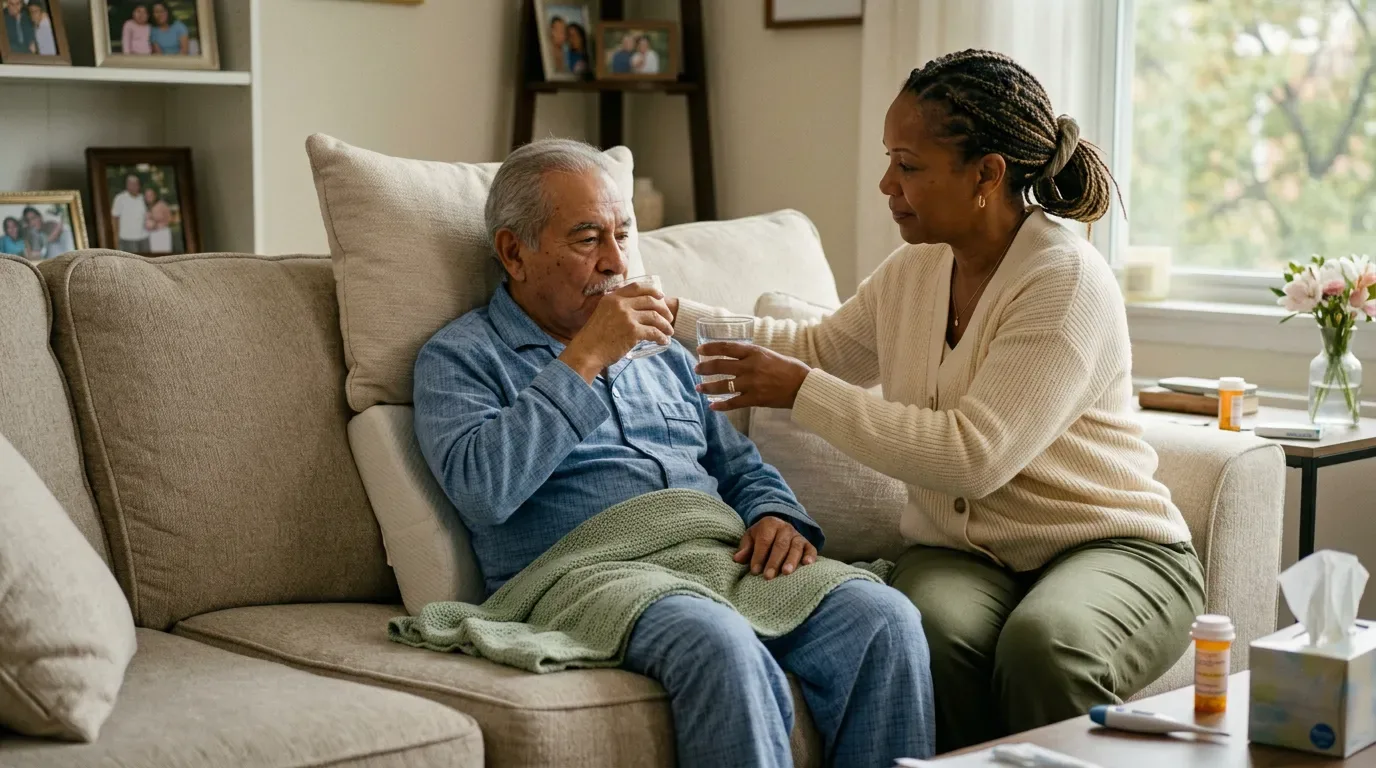
The hours that make the day easier.
A few hours of help, a few times a week, from a person who actually knows your loved one. Companionship, meals, errands, bathing, light housekeeping — the daily fabric that keeps independence intact.
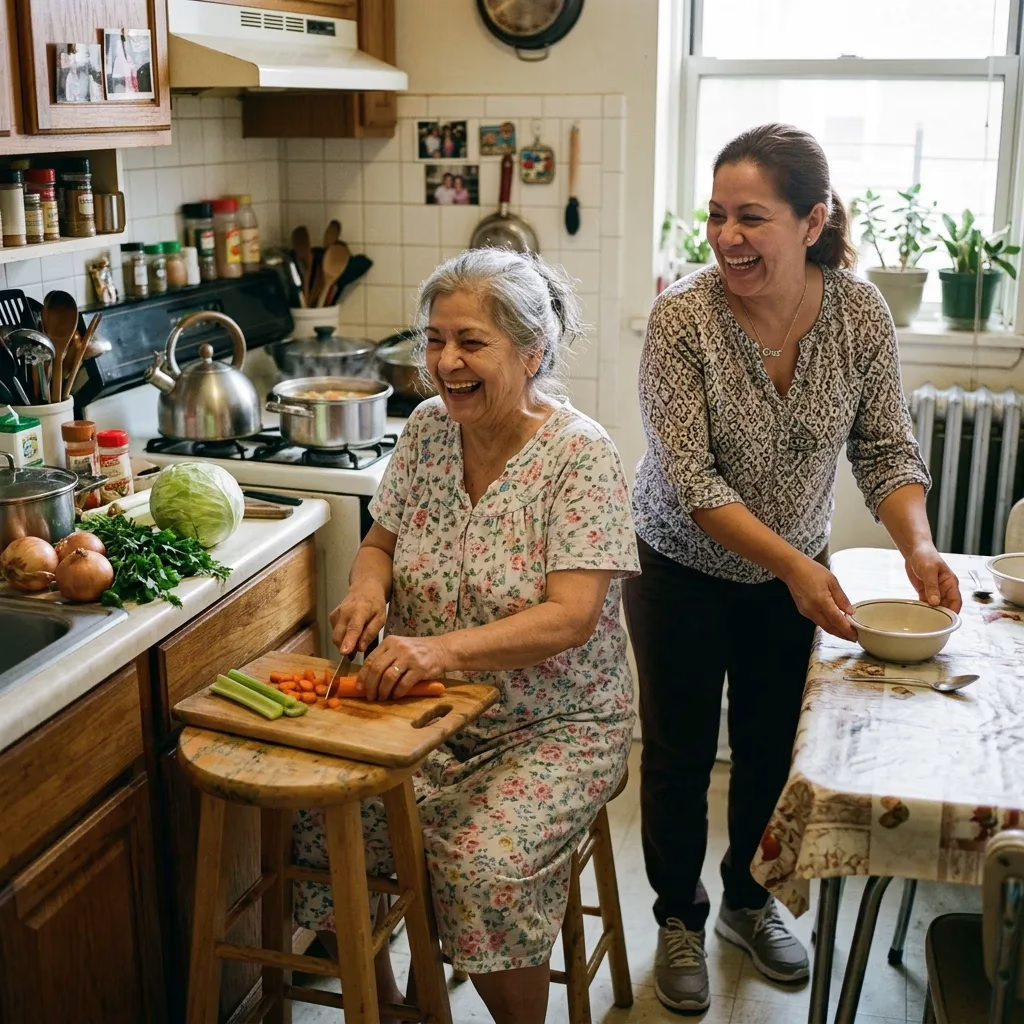
Independence with backup.
Companion and personal home care is for the person who is mostly independent but would do better with company, light help around the house, and someone to notice if something is off. The caregiver is in the home for a set number of hours — usually 4, 6, or 8 — on the days that fit the family.
It's the right level when:
- Your loved one is alone for long stretches and getting unsteady or low
- Cooking, shopping, or housekeeping are slipping — tiring, not yet dangerous
- The family wants to delay a more intensive level of care for as long as it makes sense
- Post-hospital discharge: extra eyes for the first weeks home
We send the same person each time, so they learn how your loved one likes their coffee, what shows they watch, when each medicine is due.
See if your family qualifies — in one conversation.
Whether you're navigating a new diagnosis or ready to bring care home, a care coordinator walks you through your options. Bilingual intake. No fees, ever.
Real help, not a chart.
Conversation & activities
Sitting and talking. Walks. Cards. Photo albums. Whatever your loved one enjoys.
Meal preparation
Shopping, cooking, sitting at the table. A real meal beats a tray.
Personal care
Bathing assistance, grooming, dressing. Discreet, dignified, never rushed.
Medication reminders
The pillbox is checked. The morning round is taken. The evening round is taken.
Errands & transport
Grocery store, pharmacy, post office, doctor appointments. We come along or go for them.
Light housekeeping
Dishes, laundry, bed-making, vacuuming. Just keeping the home livable.
Even four hours, twice a week, changes everything.
Free intake. Free consultation. We listen first.