Remote Patient Monitoring, vitals watched every day.
Connected devices send daily readings — blood pressure, oxygen, weight, heart rate, blood sugar — to a clinical team that watches for warning signs. Small changes get caught early, often before they turn into an emergency room visit. It works right alongside your in-home aide.
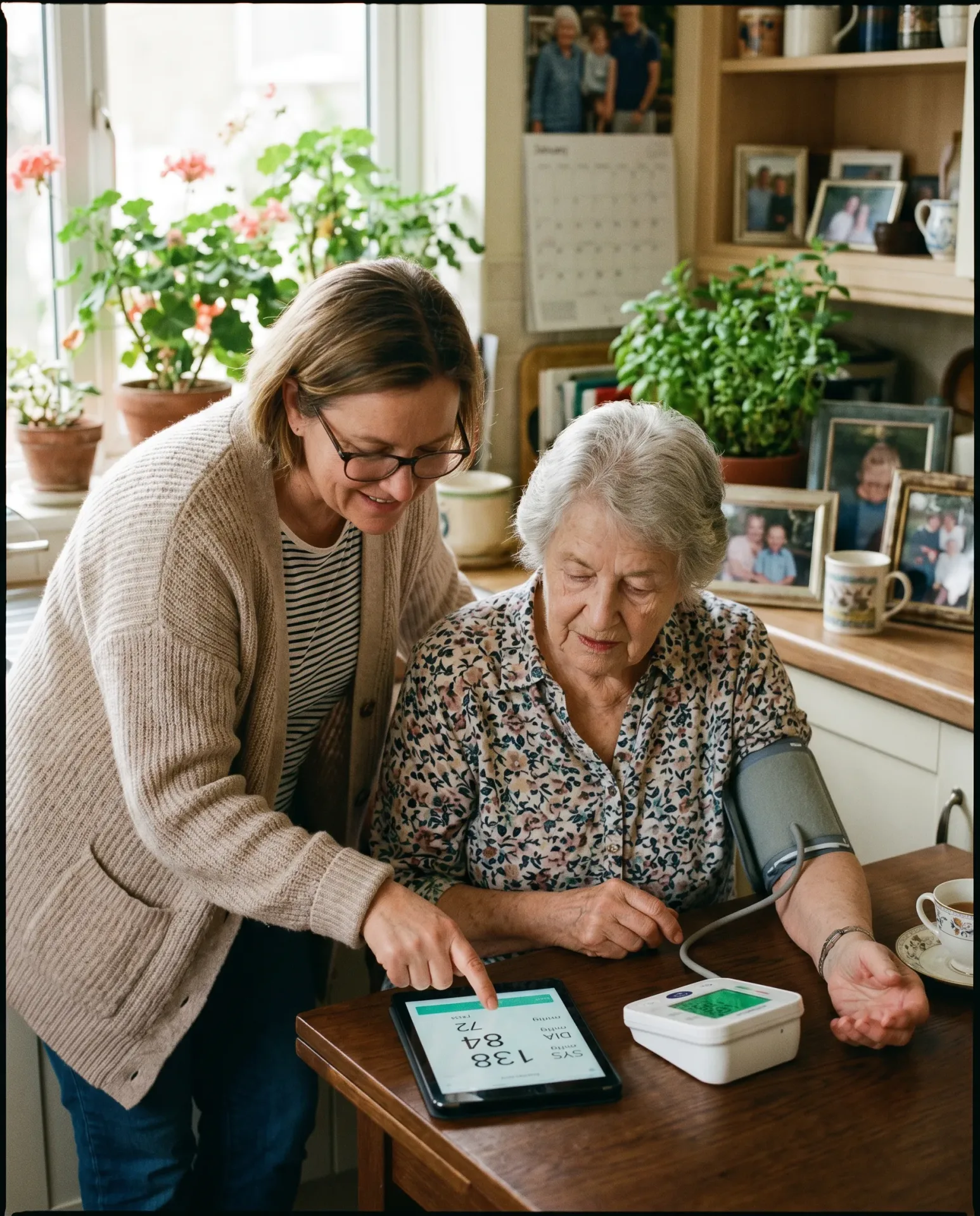
Five vitals, one daily picture.
Simple connected devices track the numbers that matter — and a team reads them every day.
Catch the small changes before they grow.
Remote patient monitoring (RPM) uses easy-to-read connected devices in the home — a blood-pressure cuff, a pulse oximeter, a scale, a glucometer — that send each reading to a care team automatically. No typing, no app to wrestle with. When a number drifts outside a safe range, the team is alerted and can act the same day.
It's most helpful when an ongoing condition needs a close eye between doctor visits:
- Heart failure, high blood pressure, or recovery after a cardiac event
- COPD, asthma, or other conditions where oxygen levels matter
- Diabetes that needs steady blood-sugar tracking
- The first weeks home after a hospital stay, when readmission risk is highest
- Living alone, where a quiet change might otherwise go unnoticed
Medicaid covers remote patient monitoring for most New Yorkers who qualify. Amelia sets up the devices, shows the family how they work, and pairs monitoring with hands-on aide care so nothing falls through the cracks.
See if your family qualifies — in one conversation.
Whether you're navigating a new diagnosis or ready to bring care home, a care coordinator walks you through your options. Bilingual intake. No fees, ever.
Three steps, then we watch.
Devices arrive ready
We ship pre-paired devices to the home — no Wi-Fi to set up, nothing to install. Open the box and they work.
Readings every day
One tap, or they sync on their own. Each reading reaches the care team automatically — nothing to log by hand.
We act early
If a number drifts out of range, we're alerted the same day and coordinate with your doctor before it becomes urgent.
How monitoring keeps your loved one safe at home.
Connected devices
Simple, pre-paired tools — blood-pressure cuff, pulse oximeter, scale, glucometer — that just work out of the box.
Daily vital readings
Readings are captured each day and sent automatically — no app to fight with, no manual logging.
Automatic alerts
If a number drifts outside a safe range, the care team is flagged right away — not at the next appointment.
Clinical team review
Trained staff look at the trends, not just one-off numbers, and coordinate with the doctor when something changes.
Fewer hospital trips
Catching a change early often means a phone call and a medication tweak instead of an ambulance and an ER waiting room.
Works with your aide
Monitoring runs alongside in-home care — your aide handles daily life, the devices watch the numbers, the family stays informed.
Peace of mind starts this week.
Free assessment, free intake, no fees ever. Tell us what condition you're managing — we'll tell you whether monitoring is a fit.