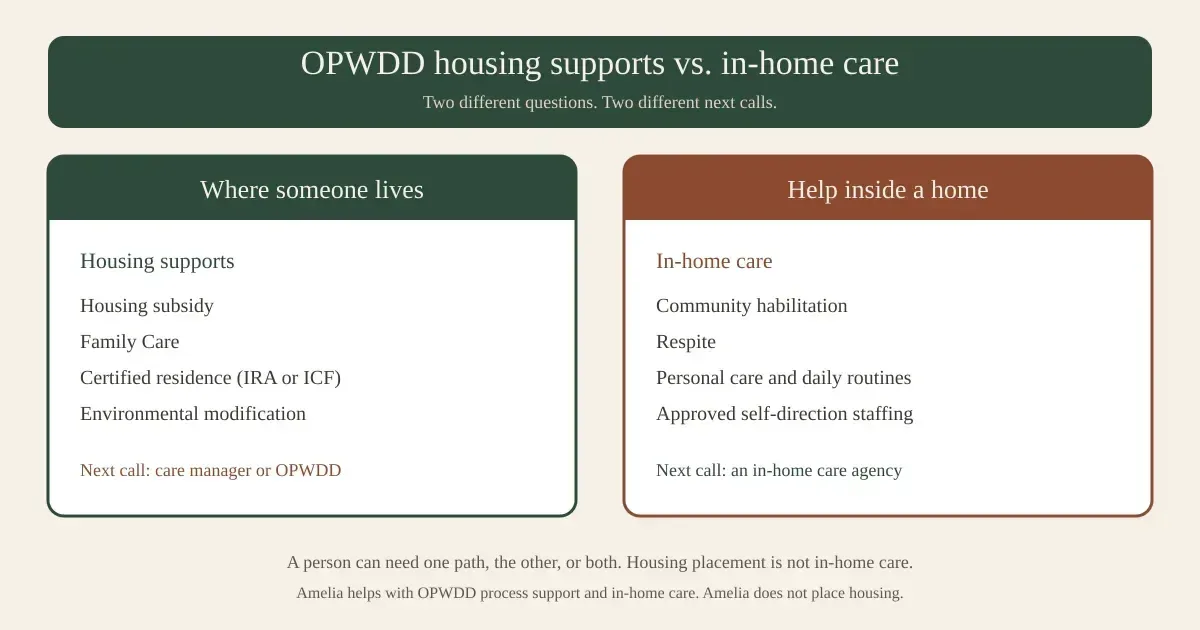
For a parent searching for a paid family caregiver for a disabled child, the first question is often whether a relative can provide care and receive compensation. In New York, that may be possible through applicable Medicaid or OPWDD self-direction arrangements, but it is not automatic. Eligibility, authorization, the child’s plan, and program rules all matter. This guide explains what families can ask and how to prepare for a discussion.
What does “paid family caregiver” mean?
A paid family caregiver is a relative who provides authorized support and is compensated through a program or arrangement that permits it. For a child with a developmental disability, families may hear about OPWDD and self-direction. OPWDD is New York’s Office for People With Developmental Disabilities. Self-direction is a way an eligible person may have a role in choosing and managing certain approved services, within program rules.
It is important to distinguish this from simply providing everyday care as a parent. A family member is not paid just because a child has a diagnosis or needs support. The child must meet the relevant program requirements, the service must be approved, and the proposed caregiver role must be permitted by the specific arrangement. A discussion with a knowledgeable program contact can help clarify which path, if any, fits the family.
Can a parent or relative be paid to care for a child in New York?
Sometimes, when eligible. Applicable self-direction arrangements may allow a family member to become a paid caregiver, but rules differ by program and individual circumstances. Families should ask who may serve as a caregiver, what duties are covered, how the worker is enrolled, and what documentation or training is required. Do not assume that all relatives can be paid or that every type of care qualifies.
For OPWDD-related services, families may need to understand eligibility, develop a service plan, and complete steps before supports begin. Approval and service authorization are separate from a family’s preference about who provides care. The process can involve multiple decisions, and no agency can promise eligibility, approval, a particular number of hours, or a specific outcome.
How does OPWDD fit into the process?
OPWDD supports eligible New Yorkers with developmental disabilities. Families commonly begin by gathering records and learning whether their child may qualify. The application and service-planning steps depend on the person’s situation. A waiver is a Medicaid-funded program pathway that can provide certain home and community-based supports to people who meet its requirements; it should not be confused with automatic approval for any service.
Amelia Home Care is a New York Licensed Home Care Services Agency that helps families navigate OPWDD eligibility and application management, alongside home care services. The company reports typical OPWDD approval timelines of four to six months, but timing varies and is never guaranteed. Amelia’s app supports digital document submission and real-time updates during the process; it does not guarantee approval, eligibility, faster processing, service hours, or any particular result.
For an overview of the agency’s pediatric home care support, families can review the relevant service information. Those supporting a child with special needs may also find it useful to understand how OPWDD and home care can relate.
What should families ask before pursuing paid care?
A short list of focused questions can make an initial conversation less overwhelming. Write down what support the child needs, who currently provides it, and which family member hopes to take on a paid role. Avoid sending sensitive health details through unsecured channels; share personal information only through an appropriate, secure process.
- Which program or self-direction arrangement could apply to my child, if any?
- Does the child need an eligibility determination, service plan, or authorization before a relative can be considered?
- Which relatives may be permitted to serve, and are there restrictions on the caregiver’s relationship to the child?
- What tasks and hours might be authorized, and who makes those decisions?
- What enrollment, training, documentation, or ongoing records would the caregiver need to complete?
- Who handles scheduling, timesheets, payroll, and questions about changes to the child’s needs?
- What other supports, such as home health aide care or community habilitation, may be appropriate to discuss?
Keep copies of notices, forms, and contact details, and note the date and name of each person you speak with. If the family receives a decision that is unclear, ask the issuing program to explain it and identify any next steps or deadlines. For general information about paid family caregiving in New York, consult the New York CDPAP information page; its description is not a determination of a child’s OPWDD eligibility or authorization.
What documents and details may help?
Requirements depend on the program, so confirm the current list rather than assuming that one checklist applies to everyone. Families can organize relevant records in advance, including:
- Existing program correspondence and eligibility decisions.
- Care plans or service authorizations already issued.
- Professional evaluations or records requested by the program.
- A plain-language description of the child’s everyday support needs and routines.
- The relative’s contact information and questions about the caregiver role.
Describe needs factually. For example, note when help is needed with daily routines, communication, safety, or community participation, without assuming that a particular task will be approved. Program representatives determine what documentation is needed and which services can be authorized.
How can families compare possible support paths?
Paid family caregiving is one possibility to ask about, not the only form of support. Families can compare the role they hope to take on with other authorized services and with the help already available. The right fit depends on the child’s needs, eligibility, program rules, and family circumstances.
| Support path to discuss | What it may involve | What to confirm |
|---|---|---|
| Relative as paid caregiver | A permitted family member provides approved care through an applicable arrangement. | Eligible relationships, approved duties and hours, enrollment, and payroll process. |
| Home health aide services | An aide supports authorized personal care and daily routines at home. | Assessment, authorization, the aide’s permitted scope, and service schedule. |
| Community habilitation | Support focused on building or practicing skills in community settings, when authorized. | Individual goals, service plan, provider arrangements, and approved setting. |
Eligible Medicaid- or OPWDD-funded services may be provided at no cost to families, but not every person or service qualifies. Ask how funding applies to the specific service under consideration. A home health aide can provide medication reminders, not medication administration; families who need medication administration should ask whether nursing services are appropriate.
What if the parent’s income is a concern?
Families sometimes delay asking for help because they assume a parent’s income automatically prevents a child from qualifying. Amelia’s stated eligibility guidance is that the child’s income, rather than the parent’s income, is considered for the relevant OPWDD discussion. Eligibility rules can depend on the program and individual situation, so treat this as a point to verify—not a guarantee or legal or benefits advice.
Ask a program representative how financial eligibility is assessed for the exact service or pathway. If Medicaid is involved, Medicaid means a public health coverage program for eligible people; rules and covered services vary. Avoid relying on a general online statement to determine eligibility for your family.
How can referral professionals help?
Care managers, social workers, hospital teams, and community organizations can help families identify the right next contact and gather relevant records with the family’s consent. A useful referral summary can state the family’s preferred language, county or borough, current program status, the support being explored, and the family’s best way to be reached. Do not include unnecessary personal health information in an informal referral.
Amelia serves families across Brooklyn, the Bronx, Manhattan, Queens, Staten Island, and Westchester County. Its bilingual intake and aides who speak seven languages may help families discuss care in a preferred language. Professionals can direct families to the free consultation page for an initial discussion, while making clear that program authorities determine eligibility and authorization.
What is a practical first step?
Start by identifying the question you need answered: whether the child may qualify for services, whether a family member may be an approved caregiver, or what care is currently authorized. Gather existing notices and a brief description of daily support needs. Then request a conversation with a program contact or a qualified agency that can explain the relevant steps without promising a result.
Talk with Amelia about your family’s next steps
Exploring paid care can feel complicated, especially when a family is already managing demanding routines. A clear question, verified program information, and support with the process can help you decide what to pursue next.