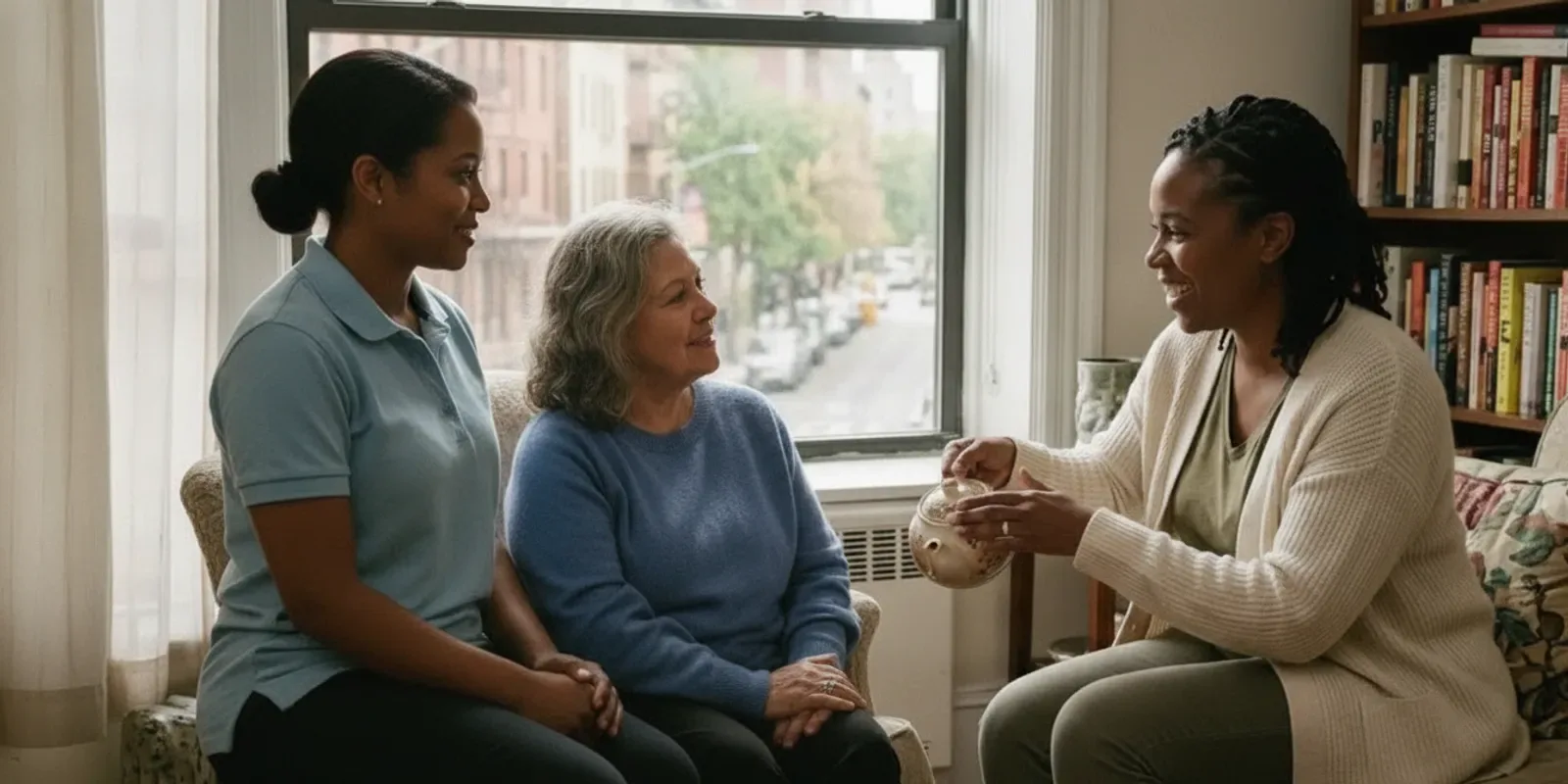
When someone is receiving cancer treatment, everyday tasks can become harder for a time. Families looking for home care for cancer patients NY can start by listing the specific help needed, then ask which services may fit the person's assessed needs and coverage. Community habilitation New York is a different kind of support: it focuses on building daily living and community skills for eligible people with developmental disabilities, rather than providing cancer treatment or nursing care.
What kind of help may be useful at home during cancer care?
Needs vary with the person, treatment plan, energy level, household, and available family support. One person may need help keeping the home routine manageable. Another may need hands-on help with personal care or mobility. Begin with daily activities rather than assuming a particular service is appropriate.
- Personal routines: Ask whether assistance with bathing, dressing, toileting, or moving around at home is available and authorized.
- Meals and household routines: Identify whether meal preparation or basic daily support would help the person remain comfortable at home.
- Companionship and reminders: Aides may offer companionship and medication reminders. Home health aides provide reminders only, not medication administration. Ask the clinical team about nursing needs.
- Care coordination: Decide who will communicate with clinicians, track appointments, and update relatives. Home care is not a substitute for the person's cancer care team.
Be concrete. Instead of saying “we need more help,” describe what is difficult, how often it occurs, and what the person can do independently. Keep private health information secure; share only relevant details through an appropriate intake process.
How is community habilitation different from cancer-related home care?
Community habilitation, often shortened to Com Hab, is a skill-building service for eligible people with developmental disabilities. It may support learning or practicing daily living skills and taking part in community activities, according to an individual's authorized plan. It is not cancer treatment, skilled nursing, or a general substitute for personal care. A person’s needs and program authorization determine which services may apply.
Families exploring OPWDD services should know that OPWDD means the New York State Office for People With Developmental Disabilities. It coordinates supports for eligible people with developmental disabilities. For an eligible person, self-direction is an approach that gives the person and family a role in planning and managing authorized supports, subject to program rules. A family member may be able to become a paid caregiver through applicable self-direction arrangements when eligible; this is not automatic.
Amelia Home Care is a New York Licensed Home Care Services Agency that helps families navigate OPWDD and Medicaid-funded in-home care. Its OPWDD process support includes application management, and its app supports digital document submission and real-time updates. These tools do not guarantee eligibility, approval, service hours, faster processing, or a particular outcome. Typical reported OPWDD approval timelines are four to six months, but individual cases and timing vary.
What should families clarify about Medicaid and payment?
Medicaid is a public health coverage program. Some home care may be funded through Medicaid, OPWDD, a waiver, or another applicable program, but services depend on eligibility, assessment, authorization, and program rules. A waiver is a program pathway that can fund specified services for people who meet its requirements. Do not assume that a diagnosis alone determines eligibility or that every requested service will be covered.
For OPWDD eligibility discussions, Amelia's stated guidance is that the child's income, rather than the parent's income, is considered. This is not an eligibility guarantee or legal advice. Families should confirm their individual circumstances and current requirements with an appropriate program representative.
Eligible Medicaid-, OPWDD-, or VA-funded services are provided at $0 cost to families. Not every person or service qualifies, and coverage must be confirmed. When speaking with an agency, ask what program may apply, what assessment or authorization is needed, whether the proposed service is covered, and whether any family cost could apply to that specific arrangement.
How can you prepare for a useful first conversation?
A short, organized summary can help families and referral professionals explain the need without trying to solve everything at once. Consider preparing:
- The immediate concern: Note the tasks the person finds difficult, when help is needed, and whether there is a time-sensitive transition from hospital to home.
- The person's goals and preferences: Include preferred language, routines, accessibility needs, and who the person wants involved in decisions.
- Existing supports: List family availability, current services, care-management contacts, and any relevant authorizations. Avoid sending sensitive records through unsecured channels.
- Questions for the care team: Ask what tasks require clinical care, what an aide may do, and who should be contacted if the person's needs change.
- Funding questions: Ask whether Medicaid or another program may be relevant and what eligibility review, assessment, or documentation is required.
For someone leaving a hospital, coordinate with the discharge planner or care manager before the transition. Share the expected date, immediate assistance needs, and follow-up plan. Home care availability and placement depend on circumstances and authorization; do not treat a general timeline as a promise.
How can professional referral partners help?
Care managers, social workers, discharge teams, and community organizations can help a family clarify the next appropriate destination. A referral is most useful when it distinguishes between personal care, nursing, OPWDD process support, and skill-building services such as community habilitation. With the person's permission, explain the practical concern, language preference, current program involvement, and urgency. Do not send more personal health information than needed.
For a family seeking cancer-related home care, a referral partner can help connect the household with a home care discussion and the person's oncology or primary care team. For a person with developmental disabilities who may need OPWDD support, use a separate eligibility and service-planning conversation. Amelia serves families across Brooklyn, the Bronx, Manhattan, Queens, Staten Island, and Westchester County, and offers bilingual intake; its aides speak seven languages.
Families can also review senior home care options when arranging support for an adult or older person, or learn about pediatric home care for a child. For help understanding how an agency fits into New York care, see what an LHCSA does. Families considering community habilitation and OPWDD can explore OPWDD and home care for children.
What can families do next?
Write down the top two or three tasks that need support and identify whether the concern is personal care, nursing, a developmental-disability service, or a combination. If the person has cancer, keep the oncology team involved in questions about symptoms, treatment, and clinical care. If OPWDD may apply, ask about the eligibility and planning process without assuming a particular result.
Discuss your family's care needs
Frequently asked questions
Does a cancer diagnosis automatically qualify someone for Medicaid home care?
No. A diagnosis by itself does not establish eligibility or authorize a service. The person's circumstances, assessment, coverage, and applicable program rules matter.
Can a home health aide give cancer medication?
Amelia's stated scope is that home health aides can provide medication reminders, not administer medication. Ask the person's care team about medication administration or nursing services.
Is community habilitation the same as personal care?
No. Community habilitation is a skill-building service for eligible people with developmental disabilities, while personal care addresses assistance with daily activities. The individual’s authorized plan and needs determine what may be appropriate.
Can a parent or relative be paid to provide care?
In some applicable self-direction arrangements, an eligible family member may be able to become a paid caregiver. Eligibility, authorization, and program rules apply, so families should confirm the details for their situation.
Where can families learn more about cancer caregiving?
The American Cancer Society publication Cancer Caregiving A to Z is described as an at-home guide for patients and families. Use educational material alongside guidance from the person's own clinicians.
Care needs can change, and it is reasonable to ask for help understanding the options. A clear description of the person's goals and daily challenges can make the next conversation more useful, whether the family is exploring home care, OPWDD support, or both.