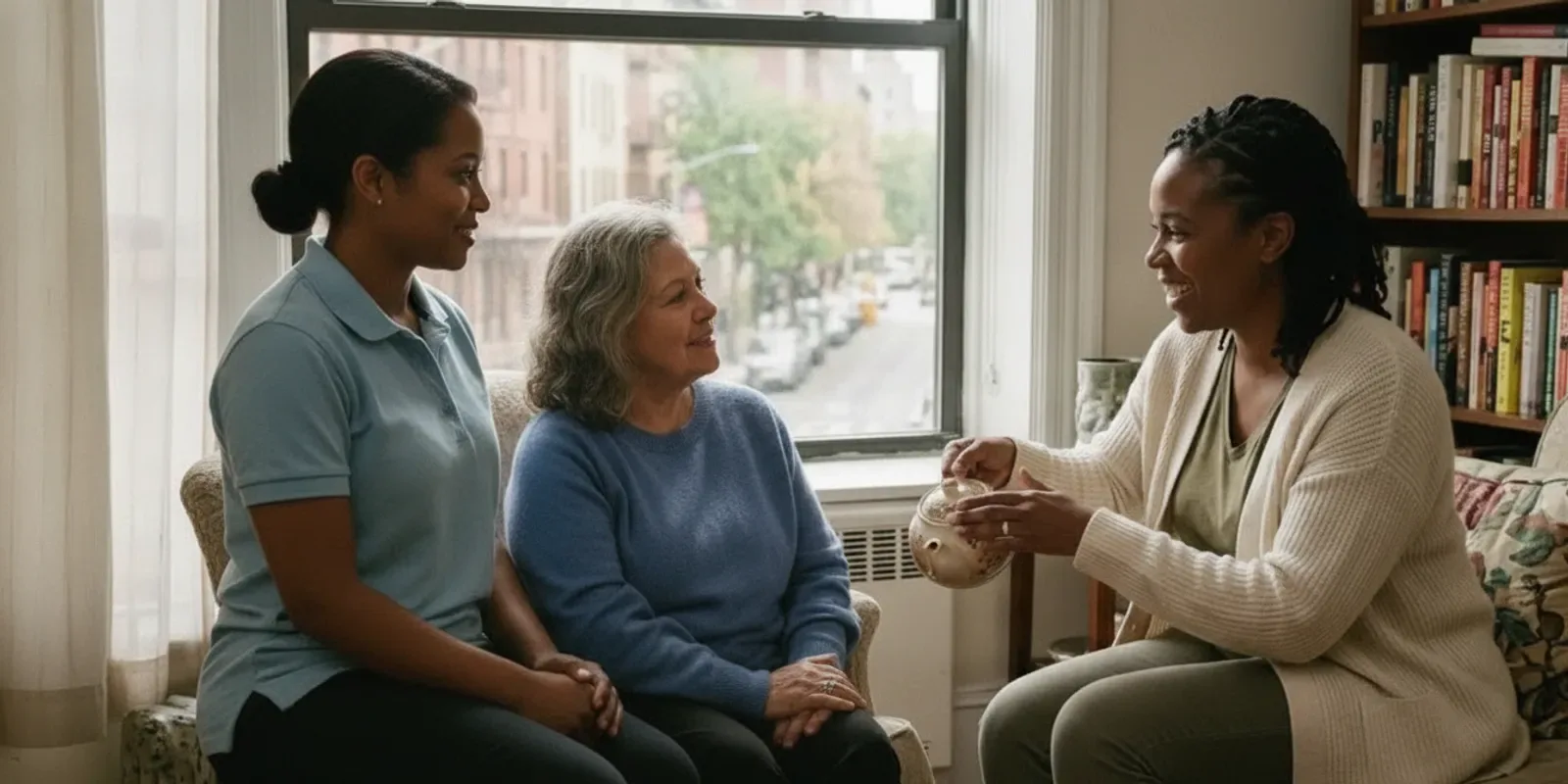
Finding home care Queens families can feel comfortable exploring begins with a clear picture of what help is needed and what questions still need answers. Whether you are arranging support for a child with a developmental disability, an older adult, a veteran, or another family member, you do not need to understand every program before making an inquiry. A few notes about daily routines, schedule, communication, and possible funding can make the first conversation more useful.
What should you clarify before calling an agency?
Start with the person’s day rather than a service label. Write down what is working, what has become difficult, and where support might help the person remain safe and comfortable at home. The goal is not to make a diagnosis or decide on a care plan by yourself. It is to give the agency enough context to explain which next steps may be relevant.
- Daily activities: Note where assistance may be useful, such as bathing, dressing, toileting, moving around, preparing meals, or reminders about medication. Home health aides can provide medication reminders, not medication administration. If medication administration is needed, ask whether nursing services should be discussed.
- Schedule: Describe the time of day when help is most important, how often support may be needed, and whether a recent discharge or other change makes the inquiry time-sensitive.
- Communication: Share the person’s preferred language and any cultural or communication needs. Amelia offers bilingual intake, and its aides speak seven languages.
- Home and family routine: Explain who lives in the home, what relatives already do, and any practical details that affect visits or coordination.
- What matters to the person: Identify preferences, routines, and activities that should be respected. For a child, include family priorities and relevant school or care-team coordination questions. For an older adult, note routines that help the person feel at ease.
Keep the notes brief and factual. At an initial inquiry, share only what is needed to discuss the possible path. If records are requested, ask how to send them through a secure channel rather than including private health details in an ordinary message.
How do you describe the kind of care you are seeking?
“Home care” can mean different kinds of support. An LHCSA is a Licensed Home Care Services Agency. Amelia Home Care is a New York LHCSA serving Queens and other New York City communities. Depending on a person’s needs and the applicable authorization, families may ask about personal care, companion support, live-in care, or 24-hour care. Families of children with developmental disabilities may also ask about pediatric home health aide care, Community Habilitation, or self-direction.
These terms are not interchangeable, and a family does not have to choose one before asking questions. Describe the practical need first: help with personal routines, supervision and companionship, support for a child’s daily activities, or a more continuous schedule. An agency can explain its service scope and what must be reviewed by a clinician, program, or payer.
For a child with a developmental disability, OPWDD means the New York State Office for People With Developmental Disabilities. Its website is an official starting point for learning about the agency and its services: New York State OPWDD. Amelia provides OPWDD process support, but program eligibility and service decisions are made through the applicable process, not by an introductory conversation. Families can read more about OPWDD and home care for children with special needs or pediatric home care in New York.
For an adult or senior, ask what personal care or schedule options may fit the situation. A Medicaid managed long-term care plan, an NHTD or TBI Waiver, OPWDD services, and veterans’ benefits are separate pathways with different rules. A waiver is a program that can fund certain home and community-based supports for people who meet its requirements. Asking which program may be relevant is a useful first step; it is not a determination that the person qualifies.
What questions help you assess agency fit?
Use the first conversation to understand how the agency communicates, what it can explain, and which questions must go elsewhere. A clear answer may include what is not yet known. Avoid relying on a verbal assurance of a particular approval, schedule, or caregiver placement before the required steps are complete.
- What information do you need to understand the person’s needs and the family’s priorities?
- Which service or funding path might be relevant, and who makes the eligibility or authorization decision?
- What parts of the process can your agency help coordinate, and which steps belong to the family, clinician, payer, or another organization?
- How should we share forms or records, and how will updates and questions be handled?
- What language support is available for intake and ongoing coordination?
- How are schedules and needs reviewed if the person’s circumstances change?
- What is the next step, who is responsible for it, and what will that step clarify?
If a child’s OPWDD process is being explored, ask how the agency organizes the application steps and communicates about documents and updates. Amelia’s app supports digital document submission and real-time updates during the OPWDD process. Those features help families follow communications; they do not guarantee eligibility, approval, service hours, faster processing, or a particular result. Amelia reports typical OPWDD approval timelines of four to six months, but timing varies and is not a promise.
Ask how any proposed care relates to the person’s authorization and the agency’s scope. For example, home health aide medication reminders are different from medication administration. Families should raise clinical questions with the appropriate health professional and ask the agency to clarify which services it can provide. Learning about what an LHCSA is in New York can also help make the agency’s role clearer.
What should Queens families ask about Medicaid and cost?
Medicaid is a public health coverage program. Some home care services may be funded through Medicaid when the person and the service meet program requirements and the required authorization is in place. Amelia states that eligible Medicaid-, OPWDD-, or VA-funded services are provided at $0 cost to families. That statement is not a promise that every person or service qualifies, so ask which funding path is being considered and what still needs confirmation.
When discussing cost, separate three questions: Is the person eligible for the program? Is the requested service covered and authorized? Is the agency able to provide the service under the approved arrangement? The answer to one does not automatically settle the others. If you are unsure whether a program may apply, ask what information is needed to explore it and which organization can confirm the rule for your circumstances.
For a child being considered for OPWDD support, Amelia’s stated eligibility distinction is that the child’s income, rather than the parent’s income, is considered. This is not legal advice or an eligibility guarantee; families should confirm their circumstances through the applicable process. You can review New York Medicaid income questions and bring specific questions about current rules to the consultation.
How can families prepare for the first call?
A one-page preparation note is enough. Include the person’s borough, preferred language, the main reason support is being explored, tasks where help may be useful, the schedule you have in mind, and any time-sensitive event. Add a short list of questions about programs, documentation, and next steps. You do not need to collect every record before asking what may be relevant.
If the person has a current care plan or recent discharge instructions, make a note of their existence and ask whether they are useful. Do not change a treatment or medication routine based on general home care information. Share health documents only through a channel the agency identifies as appropriate and secure.
Families considering self-direction can ask whether the program permits an eligible family member to become a paid caregiver and what responsibilities and program rules apply. Do not assume every relative can be paid or that a particular arrangement will be approved. Clarify who handles each step and how the person receiving care remains involved in decisions where possible.
How can referral professionals help a Queens family?
Care managers, social workers, hospital discharge planners, and community organization staff can help a family start with a focused, consent-based referral. With the family’s permission, share a preferred contact method, broad care need, language preference, and relevant timing. Avoid sending unnecessary private health details through an unverified channel.
Make the referral destination fit the question. Families exploring support for a child can review Amelia’s pediatric home care page; those arranging support for an older adult can start with senior home care information. For a general inquiry, share the free consultation page or contact page so the family can choose how to proceed.
What is a practical first step?
Choose one person to coordinate the inquiry, write down the most important daily needs and questions, and contact an agency to discuss possible next steps. If Medicaid, OPWDD, a waiver, or VA support may be relevant, ask what is known, what needs confirmation, and which organization makes each decision. A supportive conversation can help a Queens family understand the available questions without requiring them to settle every care decision at once.
Families can take the process one question at a time, beginning with the kind of help that would make daily life more manageable and learning which options may be worth exploring.