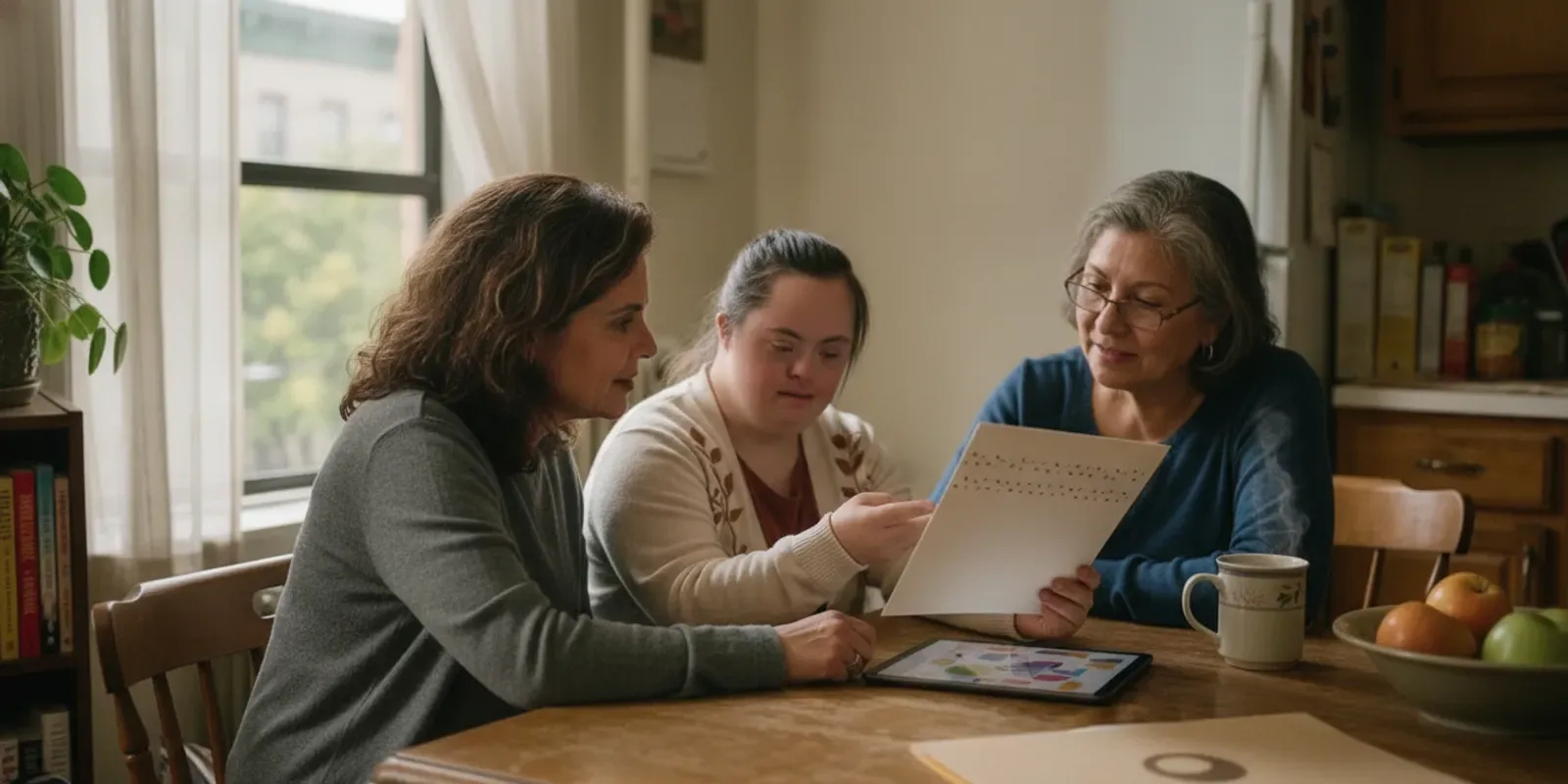
OPWDD self-direction gives eligible people with developmental disabilities more say in the services, staff, and schedules that support their goals. In New York, a person and their chosen circle may have more responsibility for planning and managing approved supports, with help from care managers and other program professionals.
What does OPWDD self-direction mean?
OPWDD is the New York State Office for People With Developmental Disabilities. Self-direction is a way for a person who receives OPWDD services to have more control over how certain approved supports fit into daily life. The person may help choose services, staff, and schedules, while a support team helps with planning and administration.
According to the New York OPWDD self-direction page, people who are eligible for OPWDD services and enrolled in the Home and Community Based Services, or HCBS, Waiver may choose self-direction. The page also explains that a care manager can help a person learn about the option and take the next steps.
Self-direction does not mean that a family must handle every detail alone. It also does not mean that any service, worker, purchase, or schedule is automatically approved. The choices available depend on the person's eligibility, approved plan, budget, service rules, and the arrangement selected with the person's planning team.
A waiver is a Medicaid program pathway that may fund certain home and community-based services for people who meet its requirements. It is not a blanket approval for every service or expense. Families should confirm the current rules for the person's plan before making decisions.
Who can use OPWDD self-direction?
OPWDD self-direction is intended for people who want more involvement in directing their supports and who meet the program requirements. The person may make decisions independently or receive help from a designated person or circle of support. A care manager can explain the current eligibility and enrollment steps for an individual situation.
The OPWDD plan-your-services guidance can help families understand where planning fits into the larger service process. It is still important to ask the care manager which requirements apply, because a general webpage cannot decide whether a specific person qualifies.
What roles support a self-direction plan?
Self-direction is a team process. The person receiving services remains at the center, while family members, trusted supporters, and professionals help turn the person's goals into an approved plan. The exact roles may vary, so ask each person to explain their responsibilities in plain language.
| Role | What the role may involve | Questions to ask |
|---|---|---|
| Person receiving services | Shares preferences, goals, routines, and support needs, with help when needed. | What choices are most important to me? |
| Family or circle of support | Helps discuss goals, compare options, organize information, and support decisions when appropriate. | Which decisions will we help with? |
| Care manager | Coordinates planning and helps connect the person with relevant services and program steps. | What is the next step, and who owns it? |
| Support broker | May help the person and circle understand and carry out self-direction choices, depending on the arrangement. | How will planning choices be put into practice? |
| Fiscal intermediary | Provides fiscal and administrative support for approved self-directed services and budgets. | Which records, payroll steps, or approvals do we manage? |
Other providers may deliver services included in the approved plan. A fiscal intermediary, or FI, supports administrative and fiscal tasks. The FI does not decide whether a person is eligible for OPWDD services. The care manager, FI, support broker, and service providers each have different responsibilities.
Ask for a written list of contacts and next steps after planning meetings. This can prevent confusion when a family needs to report a change, ask about a budget, or understand why a requested support is not available.
How is self-direction different from traditional supports?
The main difference is how much control and responsibility the person and their circle have over approved supports. Self-direction may offer more flexibility in choosing staff, activities, and schedules, while traditional supports generally rely more heavily on provider or program arrangements. Both approaches still operate within eligibility, authorization, safety, and documentation requirements.
| Planning question | Self-direction | Traditional supports |
|---|---|---|
| Who helps shape services? | The person and circle have more involvement within the approved plan. | A provider or program arrangement may handle more service decisions. |
| Who may help with staff choices? | The person may have more say, subject to program rules and approvals. | The provider may select and schedule staff under its service model. |
| What responsibility does the family have? | It may include more planning, worker, record, or budget-related tasks. | More operational tasks may sit with the provider. |
| Can the plan change? | Ask how to request changes as needs and goals change. | Ask the provider and care manager how changes are requested. |
Choosing self-direction is a personal planning decision. It may be helpful for someone who wants more responsibility and flexible supports, but it can also require time, organization, and follow-through. A care manager can help compare the options without assuming that one approach is right for every person.
What steps should a New York family expect?
There is no single checklist that fits every person. These steps provide a practical starting point for a family or professional referral partner preparing for an OPWDD self-direction conversation.
- Confirm the starting point. Ask OPWDD, a care manager, or an appropriate support organization which eligibility or enrollment step comes first. An information call is not an eligibility decision.
- Describe the person's goals and daily life. Note routines, communication preferences, community activities, safety concerns, and areas where the person wants greater independence or support.
- Ask about HCBS Waiver enrollment. Confirm whether the person is enrolled, what steps remain, and which self-direction options may be available under the approved plan.
- Attend a self-direction information session when directed. OPWDD describes an information session and a Circle of Support as part of learning how self-direction may work. Ask who should attend and what information to bring.
- Discuss services, staff, and schedules. Ask which choices are permitted, how workers are selected, what qualifications apply, and which services must be delivered by an approved provider.
- Understand the budget and administration. Ask how the budget is developed, which purchases or services may be considered, what records are required, and what the FI or other professionals handle.
- Review the plan before services begin. Confirm authorized supports, contacts, worker arrangements, reporting steps, and how to request changes. Keep copies of notices and planning documents.
Professional referral partners can help a family prepare without making promises on the family's behalf. Care managers, social workers, hospital discharge teams, care-coordination teams, and nonprofit staff may gather the person's stated goals, current contacts, and time-sensitive questions before a consultation. They should share personal health information only through an approved channel and with appropriate permission.
For children, Amelia's stated guidance is that the child's income, rather than a parent's income, is considered in the described OPWDD eligibility context. This is not a legal or eligibility guarantee. Families should confirm current requirements with OPWDD or a qualified benefits professional.
What questions should you ask before choosing self-direction?
A focused list of questions can help a family understand both the flexibility and the work involved. Bring these questions to the care manager, support broker, FI, and other professionals involved in the person's plan.
- Is the person eligible for OPWDD services and enrolled in the HCBS Waiver required for self-direction?
- Which services and supports may be considered for this person's approved plan?
- What decisions can the person or circle make, and which decisions require program or provider approval?
- Who will help with worker recruitment, qualifications, scheduling, time records, or payroll steps?
- What does the FI handle, and which records must the family keep?
- How is the budget established, reviewed, and changed?
- Can an eligible family member serve as a paid caregiver in this arrangement, and what rules apply?
- How can the family request a change if the person's needs or goals change?
- Who should be contacted if a worker is unavailable or a service is delayed?
A family member may be able to become a paid caregiver through an applicable self-direction arrangement when the person and caregiver meet program rules. Payment is not automatic, and the family should confirm the available option, qualifications, and restrictions for the person's plan.
How can Amelia Home Care help with OPWDD questions?
Amelia Home Care is a New York Licensed Home Care Services Agency that helps families navigate OPWDD and Medicaid-funded in-home care. Amelia's OPWDD support includes process management and help understanding next steps from eligibility discussions through service planning. The appropriate path depends on the person's circumstances and approved services.
Amelia reports that OPWDD approval often takes four to six months in typical cases. This is a reported timeframe, not a promise. Amelia cannot guarantee eligibility, approval, service hours, caregiver placement, faster processing, or any other outcome.
Amelia's app supports digital document submission and real-time updates during the OPWDD process. These features can help a family follow communications and submit materials, but they do not guarantee approval, eligibility, faster processing, service hours, or a particular result.
Eligible Medicaid-, OPWDD-, or VA-funded services may be available at $0 cost to a family, subject to program rules. Not every person, service, or situation qualifies. Families in Brooklyn, the Bronx, Manhattan, Queens, Staten Island, and Westchester can review Amelia's OPWDD and home care support for children. Referral partners can use the Amelia contact page to ask about an appropriate referral conversation.
Frequently asked questions about OPWDD self-direction
Does OPWDD self-direction guarantee a specific service or budget?
No. Eligibility, approved supports, funding, budgets, and service arrangements depend on the person's circumstances and applicable program rules. Review the current plan and confirm decisions with the appropriate OPWDD, care-management, and fiscal-administration professionals.
Can a parent income prevent a child from receiving OPWDD services?
Amelia's stated guidance is that the child's income, rather than the parent's income, is considered in the described eligibility context. This does not guarantee eligibility. Families should confirm current requirements with OPWDD or a qualified benefits professional.
Can a parent or another relative be paid to provide care?
It may be possible through an applicable self-direction arrangement when the person and caregiver meet program rules. Ask the care manager and FI which family-member roles, qualifications, and restrictions apply. Payment is not automatic.
Is OPWDD self-direction the same as being on your own?
No. A person may work with family or a circle of support, a care manager, a support broker, a fiscal intermediary, and service providers. The important step is to understand which tasks the person or family is responsible for and where to get help.
Can a person change from self-direction to traditional supports?
OPWDD explains that self-direction is flexible and that a person can switch back to a more traditional model of supports if self-direction does not fit. Ask the care manager how that change would work for the person's plan.
OPWDD self-direction can offer meaningful planning choices, but it also comes with responsibilities. Start by asking clear questions, keeping written records, and confirming each decision with the appropriate OPWDD or Medicaid program contact.