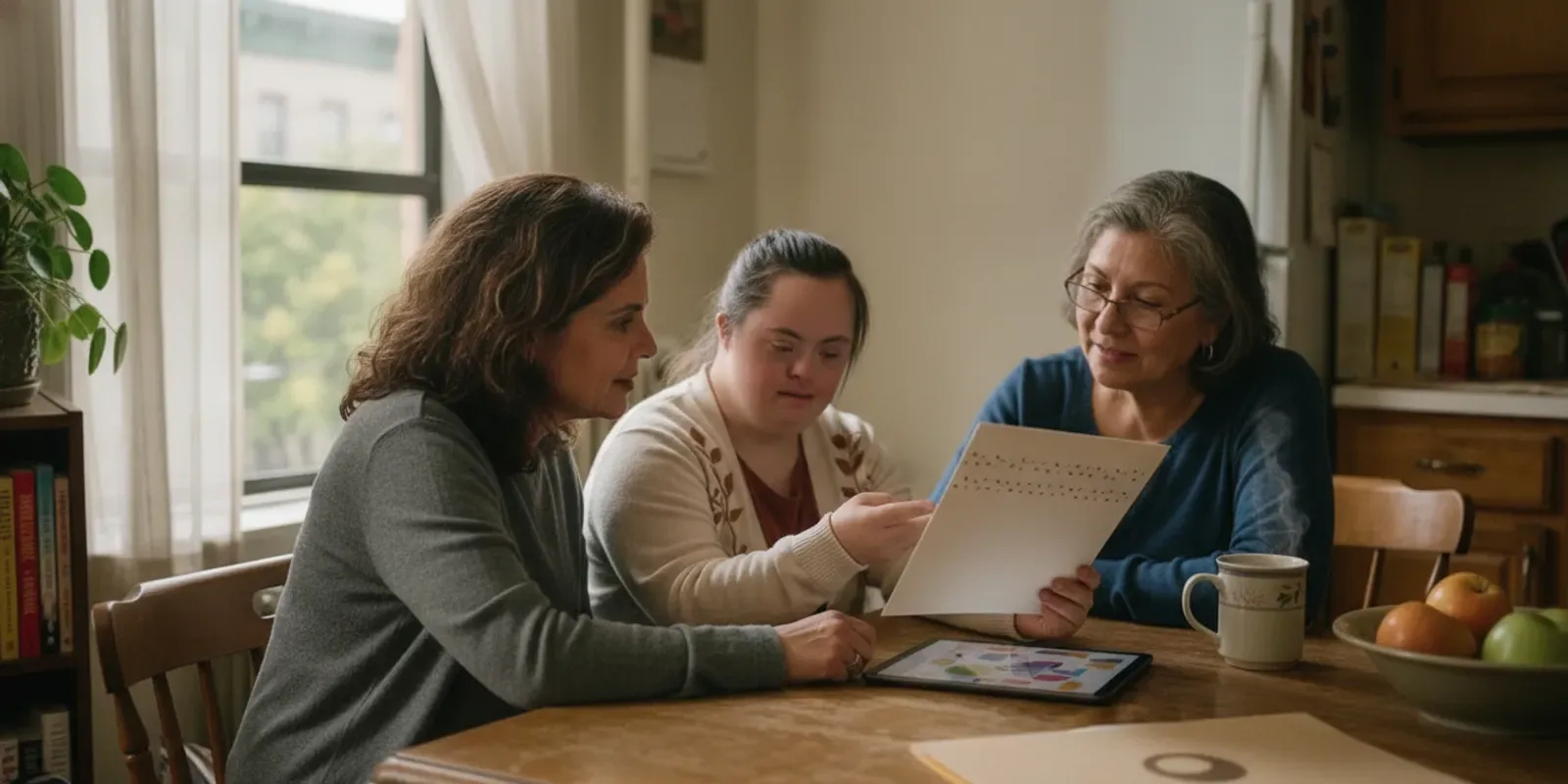
Receiving an OPWDD decision can leave a family unsure about what happens next. This guide to OPWDD appeal assistance explains practical questions and preparation steps without promising a particular result. A decision may involve eligibility, enrollment, a service change, a reduction, a suspension, a termination, or another part of the support process. “Appeal” is a general term families often use for challenging a decision; the correct next step depends on the notice, the decision-maker, and the program involved.
Call (646) 961-8942 to discuss OPWDD next steps
Amelia Home Care can help a family organize questions and understand what information to bring to an eligibility or care discussion. Families can also review Amelia’s OPWDD support for children and families and OPWDD care coordination information before deciding what conversation to have next. This article is general education, not legal, medical, or benefits advice.
What does an OPWDD decision mean?
OPWDD is the New York State Office for People With Developmental Disabilities. It oversees services and supports for people who meet applicable developmental-disability eligibility and program requirements. A decision is the written outcome of a particular review or action. It does not automatically answer every other question about services, funding, or care.
Read the entire notice carefully. Look for:
- What was decided: Identify whether the notice concerns eligibility, enrollment, disenrollment, a service, a Life Plan, or another action.
- When the decision takes effect: Write down the effective date and any response deadline shown in the notice.
- Why the decision was made: Note the facts, documents, assessments, or program rules the notice relies on.
- What review option is described: The notice should explain applicable objection, conference, hearing, or other review rights.
- Where to ask questions: Save the phone number, address, website, or office named in the notice.
Do not assume that a denial of one request means the person can never receive any OPWDD-related support. Do not assume the opposite either. Eligibility and services depend on the person’s circumstances, the applicable program, required assessments, authorizations, and current rules.
What should a family do first after receiving a decision?
- Keep the notice and envelope or delivery record. Make a private copy or scan, and record when it arrived. Keep the original with other program correspondence.
- Mark every date. List the notice date, effective date, response deadline, and any appointment or conference date. Ask the issuing office to clarify a date that is missing or confusing.
- Write down the disagreement. Use plain language: what the family believes is incorrect, what information may be missing, and what outcome the family is asking the decision-maker to review.
- Gather supporting information. The relevant documents depend on the decision. Possible examples include the notice, assessments, care records, correspondence, consent forms, and an updated Life Plan when applicable.
- Ask about the stated review path promptly. Use the instructions in the notice or contact the named office. A family may need to pursue an agency conference, an objection process, a Fair Hearing, or another route, and those options are not interchangeable.
- Protect private information. Share only what is needed and use the agency’s or provider’s designated secure method. Avoid placing detailed health or disability information in a public post or an unverified email.
Families should not wait for a service problem to become an emergency before asking what a notice means. If there is an immediate safety concern or a current service interruption, explain that urgency to the appropriate program or provider contact and ask what interim steps, if any, are available under the applicable rules.
When can a Fair Hearing be part of the process?
A Fair Hearing is an administrative proceeding in which the person or representative and the agency present information to an impartial Administrative Law Judge. It is not the same as asking a provider to explain a decision. The notice should identify whether Fair Hearing rights apply and how to request one.
For the CCO/HH Notice of Determination process described by OPWDD, a person has 60 days from the date of the notice to request a Fair Hearing from the New York State Office of Temporary and Disability Assistance (OTDA). The notice controls the applicable deadline and request method; other OPWDD actions may use an objection or another review process. Read the notice and confirm the details rather than relying on a general article. The OPWDD due-process and Fair Hearing guidance provides background. OTDA also explains how to request a Fair Hearing.
For some service changes, OPWDD regulations also provide an objection process. OPWDD describes due-process rights when a provider proposes to modify services, discharge a person, reduce, suspend, or terminate an HCBS waiver service, or change an individualized service plan such as a Life Plan. The appropriate route depends on the facts and the notice. A family can ask the issuing agency, care manager, or qualified adviser to explain which process applies.
What documents can help with OPWDD appeal preparation?
There is no universal document list for every decision. Start with the notice and build a dated file around the issue it identifies. Depending on the situation, a family may want to gather:
- The complete Notice of Determination or other decision letter, including attachments.
- Earlier notices, emails, or letters that show what changed and when.
- Relevant assessments, evaluations, care records, and service plans.
- Correspondence showing documents already submitted and the date they were sent.
- A short factual timeline of applications, appointments, calls, requests, and responses.
- A list of questions and the names or offices of people contacted.
- Information from the person’s representative, care manager, or service provider that directly relates to the decision.
OPWDD’s due-process guidance says an evidence packet for certain enrollment or disenrollment matters may include consent forms, an updated Life Plan, care-record notes, medical documentation, a written case summary, the program policy used for the decision, and a copy of the notice. Families organizing records may also find Amelia’s OPWDD documentation checklist useful for preparing questions. That list is an example for the process described by OPWDD, not a promise that every appeal needs every item. Include relevant facts, not a large volume of unrelated records.
How can a care manager or social worker help?
Care managers, social workers, hospital discharge teams, and nonprofit or community-organization staff may help a family move from confusion to an organized next conversation. With the family’s permission, a professional can:
- Confirm what the family understands the notice to say and identify unanswered questions.
- Help create a simple timeline and document checklist.
- Coordinate with the care team or issuing office about the stated process.
- Help the family prepare a factual description of current support needs and the effect of the decision.
- Clarify which questions belong with OPWDD, a Care Coordination Organization/Health Home, a provider, Medicaid, or a legal or benefits adviser.
- Make a referral, with consent, that identifies the family’s borough, the support being explored, the decision date, and the requested next conversation.
A referral is not an eligibility determination, legal representation, or a guarantee that a decision will change. Professional referrers can also review Amelia’s home care referral guidance for social workers when a family wants help identifying the next conversation. Share only the minimum necessary information and follow the organization’s privacy and consent procedures. Amelia can speak with families and appropriate referral partners about possible OPWDD process support, document organization, and next-step questions, while the relevant agency or program makes its own eligibility and authorization decisions.
Can Amelia help after an OPWDD decision?
Amelia Home Care helps New York families navigate OPWDD eligibility and application management and can discuss what information may be useful for a consultation. Families can also review Amelia’s OPWDD self-direction information when self-direction is part of the questions they are gathering. Its app supports digital document submission and real-time updates during the OPWDD process. These tools do not guarantee eligibility, approval, service hours, faster processing, caregiver placement, or any particular outcome.
Eligible Medicaid- or OPWDD-funded services may be available at $0 cost to the family, subject to program rules, eligibility, authorization, and the specific service. Not every person, request, or service qualifies. Amelia can explain its role and help a family identify questions for the appropriate program contact; it cannot replace a Fair Hearing, an agency decision, or advice from a qualified legal or benefits professional.
When discussing OPWDD eligibility for a child, Amelia’s stated guidance is that the child’s income, rather than the parent’s income, is considered in the stated eligibility context. Families should confirm how current rules apply to their situation and should not treat this statement as a legal or eligibility guarantee.
What questions should a family ask before requesting help?
- What exact decision is being reviewed, and what date does it take effect?
- What review or hearing option does the notice describe?
- What is the deadline and how should the request be submitted?
- What documents support the decision, and how can the family obtain or review them?
- Could an agency conference, correction of missing information, objection process, or Fair Hearing be relevant?
- Who can help the family organize records without promising a particular result?
- If a service is changing, what should the family ask about while the review is pending?
Write down the answer to each question and the name of the person or office that provided it. If the issue involves a legal deadline, hearing rights, or a benefits dispute, consider asking a qualified legal or benefits adviser for advice about the family’s specific circumstances. For broader agency context, families can read what a New York LHCSA does and ask which role applies to their situation.
What is the next step?
Start with the notice, the dates, and the question the family needs answered. Contact the office named in the notice promptly, keep copies of submissions, and ask a care manager or other trusted professional to help organize the conversation when appropriate.
Call (646) 961-8942 for a free OPWDD consultation discussion
You can also request a free consultation with Amelia. Families and care managers can ask what information to prepare and whether Amelia’s OPWDD process support may fit the situation. Any next step remains subject to the applicable program’s rules and decisions.
Frequently asked questions
Is an OPWDD appeal the same as a Fair Hearing?
No. “Appeal” is a broad term. A Fair Hearing is one administrative review process, while an objection process, agency conference, correction request, or another review route may apply in a different situation. Follow the notice and confirm the correct route.
How long does a family have to request a Fair Hearing?
For the CCO/HH Notice of Determination process described by OPWDD, a person has 60 days from the date of the notice to request a Fair Hearing from OTDA. The notice controls the applicable deadline and submission method; other OPWDD actions may use an objection or another review process. The family should read its own notice and confirm the details promptly.
Will getting help guarantee that OPWDD changes its decision?
No. Assistance with organizing documents, questions, or next steps does not guarantee eligibility, approval, service hours, funding, caregiver placement, a changed decision, or any other outcome.
Can a care manager request a Fair Hearing for a family?
The family or authorized representative should follow the instructions in the notice and confirm who may submit a request. A care manager may help coordinate information and referrals with the family’s consent, but should not assume authority or provide legal advice outside their role.
Can Amelia represent a family at a hearing?
Amelia can discuss OPWDD process support and help a family prepare questions and documents for an appropriate conversation. Families should ask the relevant agency or a qualified legal or benefits adviser about hearing representation and rights.
Is this article legal or benefits advice?
No. This is general educational information. Deadlines, rights, and available review options depend on the notice and the person’s circumstances. Contact the appropriate program office or a qualified adviser for situation-specific guidance.