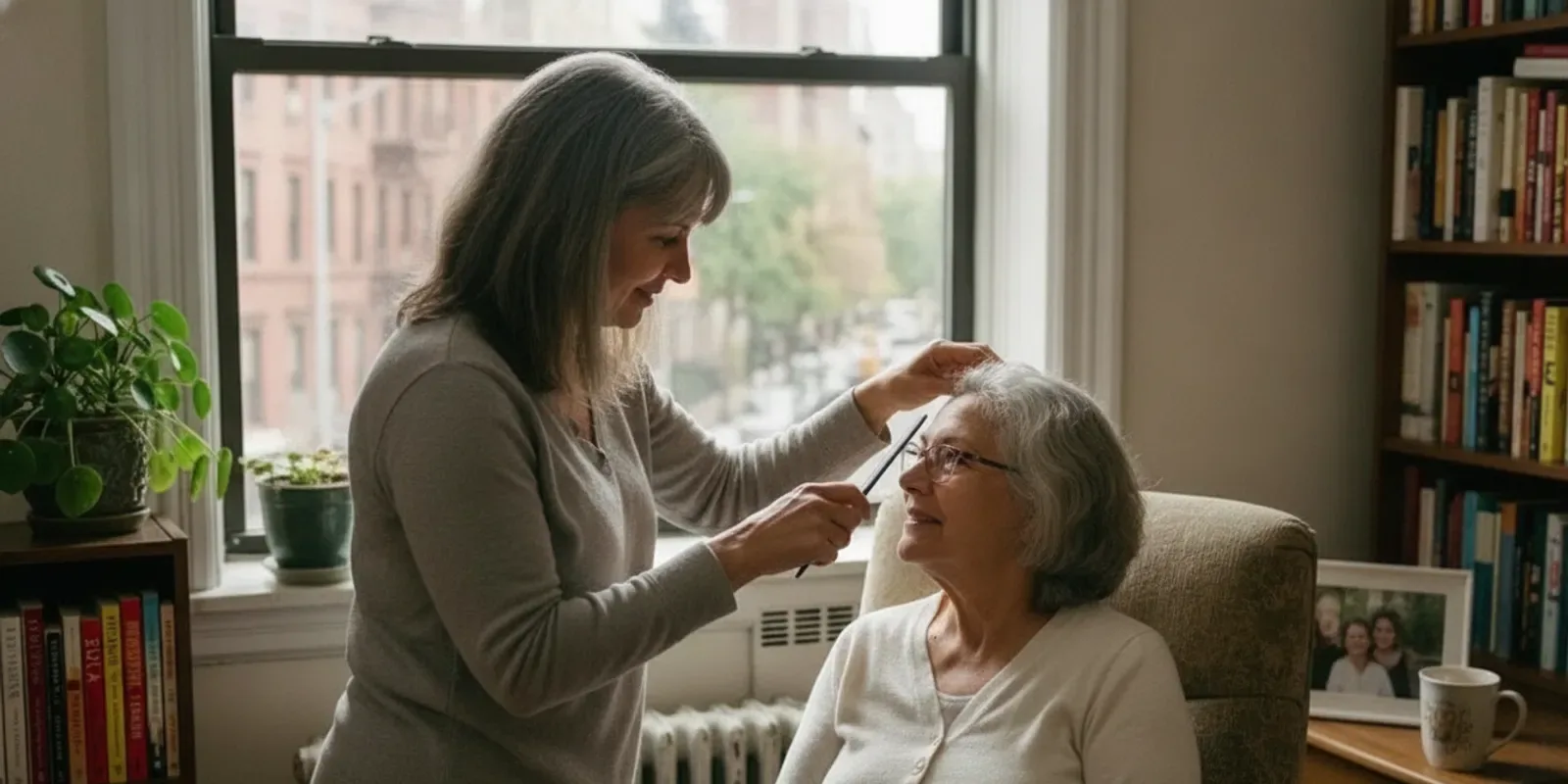
What does a home health aide do?
An HHA provides practical support with everyday activities that a person may find difficult to do alone. The goal is to assist with the person’s routine and comfort while following the authorized service plan. An aide may help someone get ready in the morning, prepare or assist with a meal, or move safely between a chair and a walker using the directions already established for that person.
Visits can look different from one household to another. One person may need help with bathing and dressing; another may need companionship and reminders to follow a familiar routine. In pediatric home care, support may include personal care, feeding and meals, mobility, monitoring, respite, and school-day routines when these fit the authorized services. These are examples, not a guarantee that every task is included in every arrangement.
Amelia Home Care provides pediatric home health aide care and adult and senior home care in New York City and Westchester County. Families can read about home health aide care, pediatric home care, and senior home care to consider which conversation may fit their situation.
Which daily tasks may aides help with?
Depending on the care plan and the service that has been authorized, help may focus on one or several parts of the day. The family and care team should clarify the task list before visits start. Common areas to discuss include:
- Personal hygiene and dressing: Assistance with bathing, grooming, dressing, and other personal routines, with attention to the person’s preferences and privacy.
- Meals and feeding routines: Help with meal preparation, eating, or an established feeding routine when those tasks are part of the service plan. Families should explain relevant instructions and ask which activities are within the aide’s role.
- Mobility and transfers: Support with moving around the home or transferring between places, following instructions already provided for the individual. Explain the equipment used and ask how assistance should be handled.
- Medication reminders: Reminding a person about a prescribed routine may be included. Amelia’s stated aide scope is reminders, not medication administration.
- Companionship and monitoring: Being present, engaging in familiar activities, and noticing concerns to share with the family or care team. Monitoring does not mean diagnosing a health problem.
- Light household tasks related to care: Light housekeeping may be included when it supports the person’s care and is part of the agreed plan. It should not be assumed to mean general housecleaning for the entire household.
- Respite and routine support: Helping maintain ordinary routines while a family caregiver takes a break, when respite is part of the arrangement.
For a child, it can help to describe how the child communicates, what they can do independently, and which parts of a routine call for hands-on assistance. For an older adult, families may want to describe the pace of morning care, preferred meal routines, and how the person moves through familiar rooms. The aim is to make the support specific rather than relying on broad labels such as “needs help all day.”
What is outside an aide’s role?
Home health aide support is not the same as nursing care. Aides work within the duties assigned to their role and the authorized services; they do not diagnose conditions, make medical decisions, or administer medication in Amelia’s stated scope. If a task appears to require nursing judgment or clinical care, raise it with the appropriate health professional and care coordinator instead of assuming it can be added to an aide visit.
For instance, a family may ask an aide to administer a medication because it is part of the person’s daily routine. That request should be discussed with the care team: a reminder is different from handling or administering medication. Similarly, if mobility needs change or a transfer becomes difficult, the family should report the change and ask for appropriate guidance rather than improvising a new technique during a visit.
State program rules and individual service plans matter. For general New York information about health services and home care, readers can consult the New York State Department of Health. This guide is general education, not medical, legal, or benefits advice. When a particular task is uncertain, ask the agency and care coordinator to explain what is authorized, who can provide it, and how a change should be requested.
How do aide duties compare with other support?
Families may encounter several kinds of in-home or community support. Program names alone do not establish what a worker will do. The following table is a general orientation; the applicable plan and authorization are what families should confirm for their own circumstances.
| Support type | Typical focus | What to clarify |
|---|---|---|
| Home health aide | Hands-on daily-living assistance, personal care, and routines | Which specific tasks and visit times are authorized? |
| Nursing care | Clinical services requiring a nurse’s role and judgment | Does a specific health task need to be discussed with a nurse? |
| Community habilitation | Support with skill-building and participation in everyday community life | What goals and activities are included in the individual’s plan? |
| Companion care | Social support and companionship | Is hands-on personal care also part of this arrangement? |
Community habilitation is a support that may help a person build skills and take part in everyday life; it is not simply another name for personal care. OPWDD means New York’s Office for People With Developmental Disabilities. Its eligibility and planning pathways are separate from a general discussion of aide tasks. Families exploring that route can review OPWDD and home care for children with special needs and OPWDD care coordination.
How can families prepare for a care conversation?
A short, concrete description of daily needs helps an intake discussion focus on practical questions. It can be especially useful when a family is managing school, appointments, work, or a transition home from a facility. Before the conversation, consider writing down:
- The routine: What happens in the morning, around meals, and before bed? Note which activities are comfortable and independent, and where assistance is needed.
- The support requested: Name the tasks, rather than only the diagnosis. For example, explain whether help is needed with dressing, meal routines, or moving from a bed to a chair.
- Existing instructions: Gather relevant care or mobility directions already provided by a qualified professional. Do not ask an aide to create a clinical plan.
- Communication preferences: Describe how the person expresses choices, discomfort, or a need for a break. Include language preferences and routines that help the person feel at ease.
- Safety and contact steps: Identify concerns the family wants the team to know and who should be contacted if something changes. Ask what to do if the usual caregiver is unavailable or a visit needs to be adjusted.
- Authorization and schedule questions: Ask what tasks are covered, when visits may occur, and how to request a review if needs change.
A useful example is a family that says, “We need help in the morning.” The intake conversation can get more specific: the person needs help choosing clothes and dressing, can eat independently after a meal is set out, and uses a walker to get to the kitchen. This helps the team discuss each task and clarify what is appropriate, rather than treating “morning help” as a single undefined service.
Share only information needed for the referral or intake, and use the organization’s appropriate secure process for sensitive health details. Avoid sending private information through an unsecured channel. Medicaid is a public health coverage program; some eligible Medicaid-funded services may be available at $0 cost to families, subject to program rules and individual eligibility and authorization. Do not assume that a diagnosis alone determines coverage.
For families considering OPWDD, a New York program pathway for people with developmental disabilities, organizing records and asking about the steps can make a first discussion more focused. Amelia provides OPWDD process management, including digital document submission and real-time updates through its app. The child’s income, rather than the parent’s income, is considered in the stated eligibility context; this does not guarantee eligibility. Reported OPWDD approval timelines are often four to six months, but timing varies and is not promised. Families can use this OPWDD documentation checklist as a way to organize questions and records.
How can referral professionals make the handoff useful?
Care managers, social workers, hospital discharge and care-coordination teams, and nonprofit or community-organization staff may help a family move from a broad concern to an appropriate care discussion. A clear referral can reduce repeated explanations without making promises about eligibility, approval, caregiver placement, or service availability.
- With the family’s permission, summarize the practical daily-living support being explored and the best way to reach them.
- Identify whether the question concerns a child with developmental disabilities, an adult, a senior, or a veteran, so the family can be directed to a relevant discussion.
- Flag time-sensitive transitions, such as a planned discharge, while making clear that timing or placement is not guaranteed.
- Note what the family has already learned about funding or care coordination, but do not present an unconfirmed discussion as a final eligibility decision.
- Explain what records may be useful to gather and who is expected to follow up, so the family knows what to expect next.
For example, a discharge professional might tell a family: “Let’s list the daily activities where help is needed, then ask the home care team which services and schedule can be considered.” A social worker supporting a child’s family might help them separate the immediate question about personal care from a longer OPWDD planning question. A community organization can offer a warm referral with the family’s consent and avoid transferring unnecessary health details.
Amelia offers bilingual intake, and its aides speak seven languages. An eligible family member may be able to become a paid caregiver through applicable self-direction arrangements; program rules apply and the option is not available in every situation. Self-direction means an eligible person or representative has a role in directing certain approved supports under program rules. To understand the separate planning route, families can read about OPWDD self-direction. For adult and senior referrals, this New York home health care guide offers another starting point.
Frequently asked questions
Do home health aides administer medication?
Amelia’s stated aide scope includes medication reminders, not medication administration. If medication must be administered, ask the care team about appropriate nursing services.
Can an aide help with a child’s school-day routine?
School-day transitions and routines may be relevant to pediatric home care, depending on the authorized service and care plan. Describe the specific routine and ask whether it is included.
Does every family qualify for Medicaid-funded home care?
No. Program eligibility and service authorization depend on the program and the individual circumstances. A consultation can help clarify what information to gather and what pathway may be relevant, but cannot guarantee eligibility or approval.
Can a relative be a paid caregiver?
An eligible family member may be able to serve as a paid caregiver through applicable self-direction arrangements. Program rules apply, and families should ask whether the option fits their situation.
What is a practical next step?
Whether you are arranging care for a family member or helping someone make a referral, start with a short list of daily tasks, current instructions, and questions about authorization. Amelia can discuss home care options and help families consider next steps without promising a particular service or outcome.
A clear conversation about the person’s routine, the aide’s role, and the services being considered can help families and referral partners set realistic expectations before care begins.