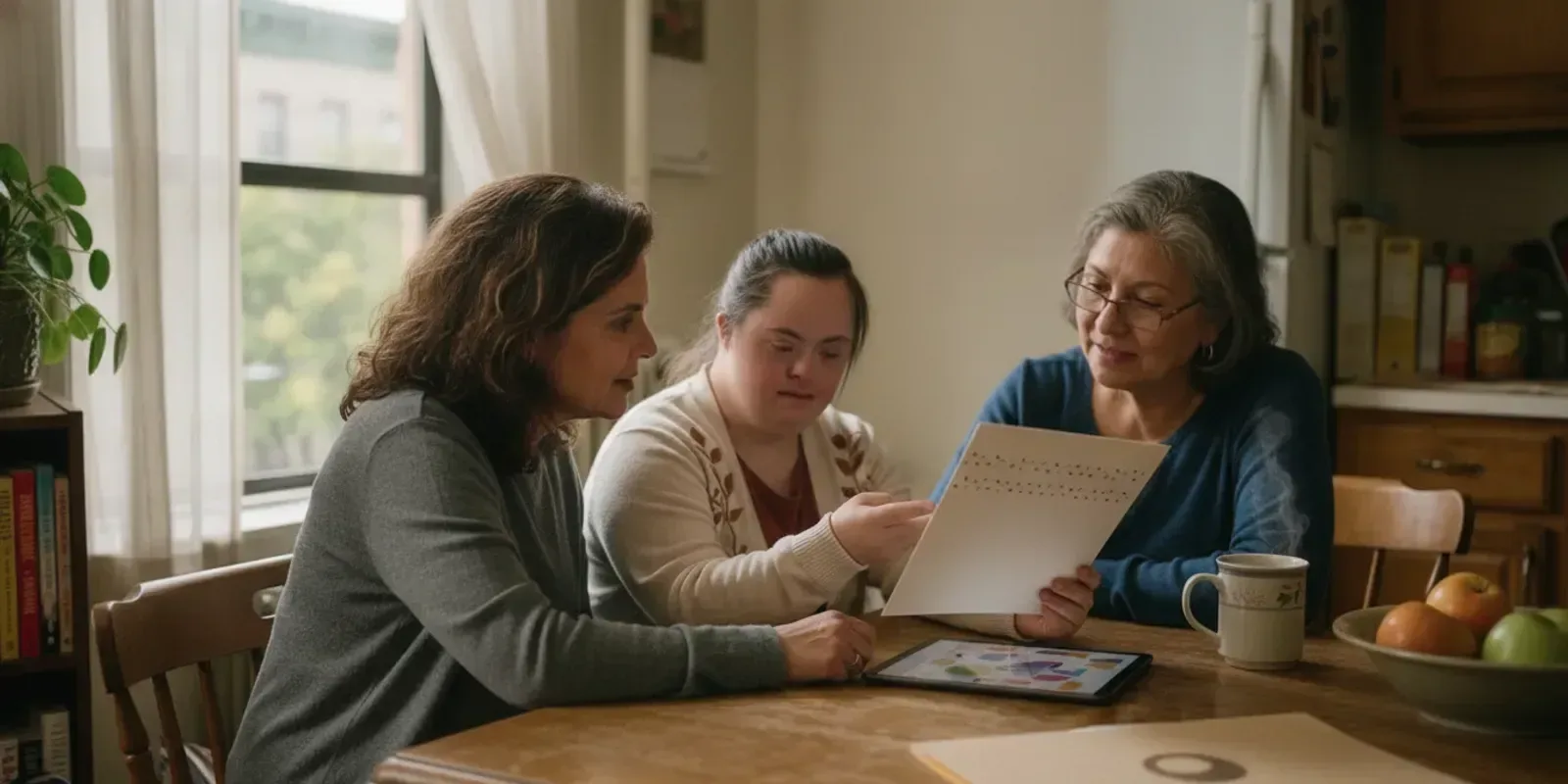
Choosing among day programs for adults with disabilities can raise practical and personal questions at the same time. An adult may want more community activities, social connection, or chances to practice skills. Family members may also be trying to understand OPWDD and available supports. OPWDD is New York's Office for People With Developmental Disabilities.
A useful starting point is to learn how each option fits the adult's priorities, support needs, and current planning. Do not assume that one program label guarantees a particular service. Families who also need to sort out the application sequence can read Amelia's OPWDD process guide for New York families.
Call (646) 961-8942 to discuss your questions with Amelia
What can day programs for adults with disabilities offer?
"Day program" is a broad phrase. Programs can differ in purpose, setting, daily rhythm, and the supports they can discuss. Some center on group activities or time at a program site. Others may involve community participation, recreation, practicing daily living skills, social opportunities, or vocational exploration. A schedule could combine several types of activity, but the details depend on the provider and the person's plan.
Rather than judging by a name or brochure, ask for a description of a typical day. Find out where activities take place, how participants make choices, and how staff adapt an activity when someone prefers a quieter pace or needs communication support. Ask whether there is time for individual goals as well as group experiences. It is also helpful to clarify what the program does not provide, so that families do not assume it replaces another service, clinical support, or personal care arrangement.
Start with the adult's own point of view. They may prefer a familiar routine, a particular hobby, a smaller group, more time outdoors, or opportunities to meet people. Use their preferred communication method and allow time for a response. If the adult is unsure, a conversation, visit, or accessible program description may make it easier to identify what they would like to try.
How does OPWDD planning connect to day services?
OPWDD supports New Yorkers with developmental disabilities through a range of services. A waiver is a Medicaid program pathway that may fund certain home- and community-based supports for people who meet applicable requirements. Families should keep several separate questions in view: whether a person is eligible for OPWDD services, which services are appropriate and authorized, what a specific provider offers, and whether there is availability. A referral or application alone does not establish all of these points.
Families may encounter terms such as day habilitation, community habilitation, and self-direction. They are not interchangeable labels. Day habilitation generally refers to a structured service. Activities and supports are planned around the participant's needs and goals. The actual setting and service details should be confirmed with the care coordinator and provider.
Community habilitation is individualized support for building skills and participating in home or community life. It is not necessarily a center-based day program. Self-direction is an arrangement through which an eligible person and their circle can have greater involvement in planning and managing certain approved supports, subject to program rules.
For an official starting point about OPWDD and its services, consult the New York State OPWDD website. For help understanding process questions and family next steps, see Amelia's OPWDD support for families of children and OPWDD care coordination. Those Amelia pages describe the documented child-focused pathway. They are not an adult day-program directory and they are not an individual eligibility decision or service authorization. Adult eligibility, authorization, and provider choice should be confirmed with OPWDD and the adult's care-planning contacts.
How to compare day programs for adults with disabilities
Use the same questions with each program so the answers are easier to weigh side by side. Include the adult in the conversation as much as possible. The table below is a discussion checklist, not a rating system: the importance of each topic depends on the person and their support plan.
| Topic | Questions to ask | What to clarify |
|---|---|---|
| Activities and goals | What happens on a usual day? How are personal interests and goals reflected? | Whether the program's approach is a match for what the adult wants to do. |
| Choice and participation | How do participants choose activities? What happens if someone wants a break or a different option? | How the program supports meaningful choices and changes in preference. |
| Staff support | What support can staff provide with communication, mobility, transitions, or other needs? | Whether the provider can discuss the person's support needs and plan. |
| Setting and access | Is the day mainly at a center, in the community, or a mix? What accessibility details should we know? | Whether the environment and activities are practical for the adult. |
| Schedule and attendance | Which days and hours are offered? What are the attendance expectations and planned closures? | How the schedule coordinates with family routines and any other supports. |
| Transportation | Is transportation available or arranged separately? How are pickup changes handled? | What the family or support network must arrange and communicate. |
| Communication | How are updates shared? Who should be contacted about a concern or a change? | How the adult, family, provider, and care coordinator can stay aligned. |
| Authorization and funding | What service or authorization applies, and who can confirm the details? | What steps remain before participation and any applicable funding are settled. |
How can you turn preferences into a practical comparison?
A short list of priorities can help make program discussions more concrete. Ask the adult to identify one or two things they hope to do and one condition that would make the experience comfortable. For example, someone who enjoys art but finds busy rooms difficult might want to ask about group size, quieter spaces, and whether they can take a break. Another person may care most about getting out into the community and having a consistent weekly schedule. These are starting questions, not assumptions about what a program can accommodate.
A 30-second comparison:
- Name the priority. Write the one or two things the adult wants from the week, in their own words when possible.
- Ask the same questions. Use the topics in the table so each provider's answer can be compared.
- Mark what is still unknown. A convenient schedule or appealing activity is not confirmed until transportation, support, and authorization are too.
- Decide the next call. Note who will follow up with the provider, the care coordinator, or OPWDD, and what question that person owns.
Then compare answers rather than relying on a general impression. A family might create three columns: "important to the adult," "provider's answer," and "follow-up needed."
If one program offers a convenient schedule but cannot yet explain transportation, record that as an unanswered question. Do not treat it as a confirmed detail. If an activity sounds appealing but the adult has not seen the setting, ask whether more information or a visit is possible.
Consider both ordinary days and changes in routine. Ask how the provider communicates about a closure, a staff change, or an activity that must be adjusted. Find out how the adult can signal discomfort or ask for assistance, using the communication method that works for them. The point is not to predict every difficulty. It is to learn whether the provider can explain its approach in a way that gives the adult and support network confidence to continue the conversation.
What can families talk through before a first call?
Families, care managers, and other referral partners can prepare a concise overview without treating any list as an OPWDD or Amelia requirement. These are optional conversation prompts, not a required intake checklist and not documentation rules for adult applicants:
- The adult's interests, preferred routines, goals, and communication preferences.
- Support needs relevant to participating in activities, such as mobility, transitions, sensory preferences, or supervision, described respectfully and only as needed.
- Current supports and services, plus the name of the care coordinator or other contact if known.
- Questions about schedule, transportation, access, staff communication, and how changes are handled.
- Which OPWDD or Medicaid questions are already answered, and which still need an official contact.
- The adult's preferred way to take part in decisions and, when appropriate, who has consent or authority to share information.
Protect personal information. Share sensitive records only through an appropriate secure process, with the adult's consent or proper authority, and when the information is needed. A first conversation can often begin with general questions rather than a full medical history. If a provider requests documents, ask why they are needed, how to submit them securely, and who will review them.
Families looking for a broader view of OPWDD paperwork may also use Amelia's OPWDD documentation checklist. A checklist can help organize a conversation, but it cannot determine eligibility or substitute for instructions from the responsible agency or care-planning team.
How can referral professionals make the handoff useful?
Care managers, social workers, hospital discharge and care-coordination teams, and nonprofit or community-organization staff may help an adult and family move from a broad search to clear next steps. First, confirm what the adult wants to explore and what the family is asking the referral to resolve. Then identify whether the immediate need is information about program activities, an OPWDD process question, an authorization question, or help coordinating a consultation.
With appropriate consent, a referral can include a concise description of the adult's goals, communication preferences, relevant support needs, known care-coordination contacts, and the family's practical questions. State what is known and what still needs confirmation. For example, distinguish "the family has started an OPWDD inquiry" from "the person is approved for this service." That precision helps avoid creating expectations about eligibility, service hours, timing, or placement.
Agree on who will follow up and how. A useful handoff names who will check authorization, who will contact a provider, and how to reach the adult or their representative. Keep the adult involved to the extent they wish and can participate.
If home-based support is also part of the discussion, review the relevant pediatric home care information only when the person is a child. Adult households can explore adult and senior home care options when that service fits. Use home care for adults with physical disabilities when the question is in-home support rather than a day program.
Call (646) 961-8942 to request a free consultation about next steps
Frequently asked questions
Does an OPWDD referral mean an adult can start a day program?
No. A referral begins a conversation or process. Eligibility, service authorization, and program availability are separate matters. Ask the care coordinator or the relevant OPWDD contact which steps apply to the adult's circumstances and what information remains to be confirmed.
Is community habilitation the same as a day program?
Not necessarily. Community habilitation is individualized support for skill-building and participation in home or community life. A day program or day habilitation service may have a different purpose, format, schedule, or authorization. Ask the care coordinator to explain the service options being considered.
What should an adult or family ask on a first call?
Start with the program's typical activities, setting, schedule, support approach, transportation, communication practices, and steps for confirming authorization. Share the adult's priorities and ask which questions the provider can answer now versus which require follow-up with a care coordinator.
Can a relative be paid to provide support?
Some eligible people may have a family-member caregiver arrangement through applicable self-direction rules. Whether a specific relative can participate depends on the arrangement and program requirements. Confirm the details with the responsible program contacts rather than assuming that a particular relationship qualifies.
Does Amelia manage OPWDD applications for adults?
No. Amelia's documented OPWDD application-management support is for families of children. Adult day-program selection, adult eligibility, and adult service authorization should be confirmed with OPWDD and the adult's care coordinator or provider. Amelia can still talk with families about documented home-care questions and point them to the right official contact.
What is a practical next step?
Write down the adult's top priorities, the questions that matter most, and the person responsible for each follow-up. Families and referral professionals can use that short list to compare day programs for adults with disabilities and keep the adult's preferences at the center without assuming a particular outcome. Adult eligibility and authorization questions belong with OPWDD and the adult's care-planning contacts, not with a child-focused application pathway.