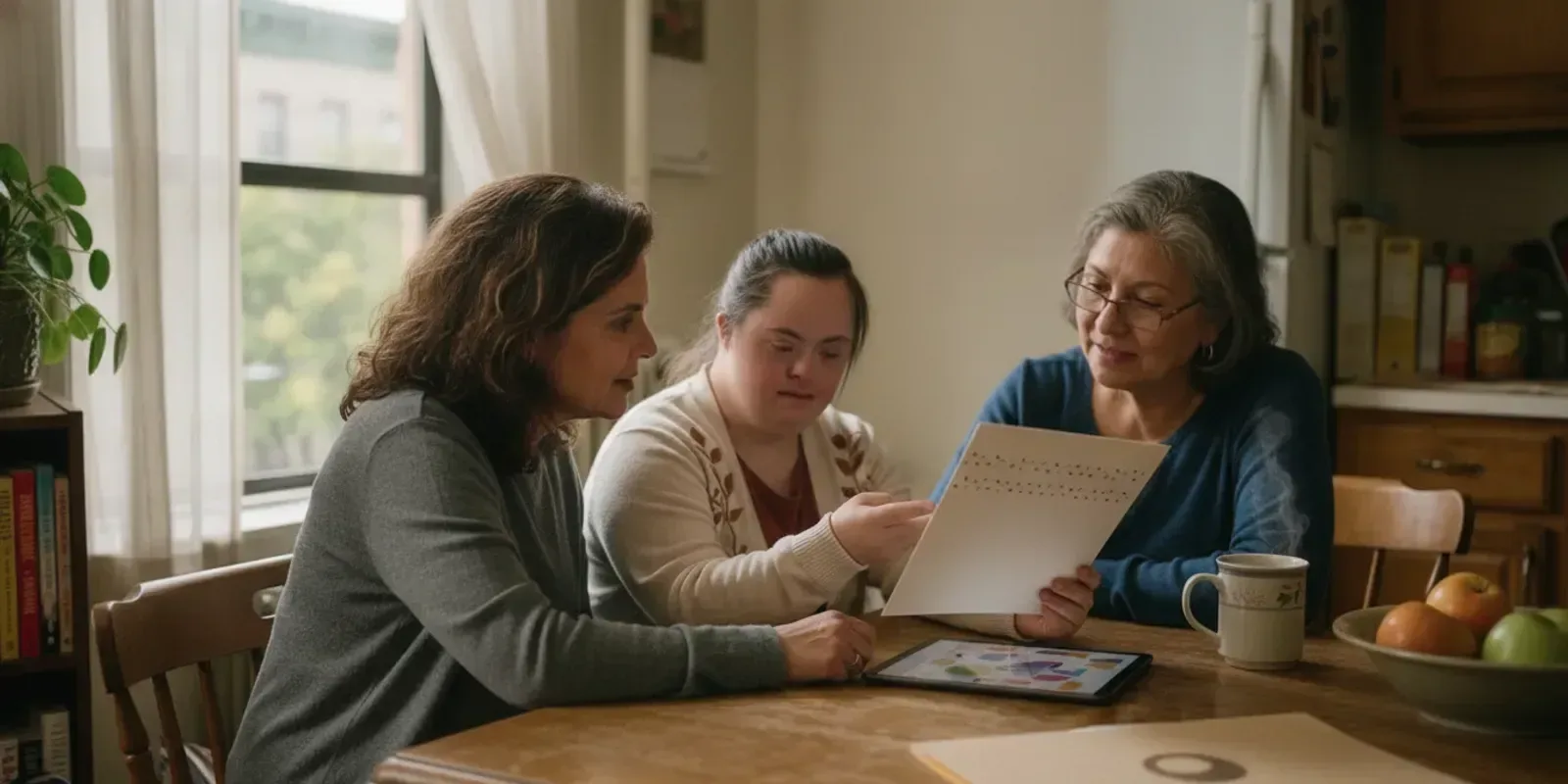
Home care for young adults with disabilities NY is a practical question, not a single program. A young adult may need help with bathing, meals, getting to work or school, or building skills to live more independently. The right support depends on functional needs, assessments, coverage, and current New York rules. This guide is for families in Brooklyn, the Bronx, Manhattan, Queens, Staten Island, and Westchester County. It is also for social workers, care managers, and discharge teams helping someone plan the next step.
Call (646) 961-8942 to discuss home care for young adults with disabilities NY.
What home care for young adults with disabilities NY can include
Home care is not decided by a diagnosis alone. A useful conversation starts with what the young adult wants to do, where help is needed, and what a program may authorize. Support can take several forms. Each one still needs the right authorization.
- Personal care can include bathing, dressing, grooming, toileting, eating, or transferring.
- Some plans include help with meals, light household tasks, and a steady daily routine.
- Support may cover mobility, communication, or safe time at home and in the community.
- Skill-building can cover daily living, travel, money, or social participation.
- Respite or caregiver support applies only when the program includes it and the person is eligible.
Aides do not replace an emergency service, physician, nurse, therapist, or medical plan. Medication decisions, wound care, injections, and therapy need the right licensed professional and authorization.
Amelia's OPWDD and home-care support page explains how the agency works with New York families and referral partners. It is a starting point for a consultation, not a decision about eligibility or hours.
Why the move into adulthood changes the plan
Some young adults already have school services or family support. As school services change, the family may need to describe needs in a new setting. They may also coordinate with different agencies, plans, or care managers. The goal is not to assume a particular service. The goal is a clear picture of preferences, strengths, support needs, and safety.
Before a referral or intake call, write down the facts a planner will ask about. Keep the notes short and specific.
- Note what the young adult does alone, and where hands-on help or supervision is needed.
- Name the routines that matter most, such as bathing, meals, travel, or getting ready for work.
- Record what the young adult wants to learn, continue, or do more independently.
- List recent changes, hospital stays, safety concerns, and current supports.
- Include preferred language, communication style, schedule needs, and caregiver preferences.
- Add current providers, care managers, or health plans, plus permission to coordinate.
These notes help the young adult and family ask focused questions. They also keep the young adult's voice central, even when a parent, guardian, or trusted person helps communicate.
How OPWDD may fit a young adult's home support
OPWDD means the New York State Office for People With Developmental Disabilities. Its Front Door process is how people learn about services, start an eligibility discussion, and look at support options. The Front Door is person-centered. It focuses on goals, relationships, community life, and the home the person prefers. Families can ask the Front Door office for their county through the contact path on that page.
OPWDD reviews eligibility under New York requirements. The state's eligibility guidance says the review looks at whether a disability meets state law. Families submit records such as medical and assessment reports. A Care Coordination Organization or Service Access Agency can help gather them. The review can have more than one step, and OPWDD sends a written notice. A home-care agency does not decide eligibility. Medicaid enrollment is a separate step for most supports.
After eligibility, a care manager can help the person and chosen supporters create a Life Plan. Amelia's OPWDD care-coordination overview gives related context. The plan can name goals, services, natural supports, and coordination needs. OPWDD's service-planning guidance says the person and care manager build the plan together and can revisit it as needs change.
Community habilitation and daily-living goals
Community habilitation is a Medicaid-funded OPWDD service. It provides one-to-one training so a person can build skills to live more independently at home or in the community. The state describes examples such as adaptive skills, community inclusion, travel training, money management, and leisure skills. It is not automatic. Eligibility must be confirmed, and the service must be recommended through the right planning process. The current description is on the OPWDD community habilitation page.
Personal-care support and community habilitation are not the same service. One may focus on help with personal tasks. The other may focus on skills and community goals. A care manager should explain which service is being considered, who authorizes it, and what the plan covers.
Compare common support paths before you choose
Families and social workers often hear several program names at once. The table below compares questions people ask about home support. It is a planning aid, not a coverage decision. Hours, cost, and approval still depend on the notice, the assessment, and the current rules.
| Question to settle | OPWDD Front Door and Life Plan | Community habilitation | Medicaid personal care | Self-direction |
|---|---|---|---|---|
| Main purpose | Learn about OPWDD and plan person-centered supports. | Build daily-living skills at home or in the community. | Help with personal tasks and some household routines. | Offer more choice over services, staff, and schedules. |
| Who it may fit | A person exploring developmental-disability supports. | An eligible person whose plan recommends this service. | A person whose assessment supports this Medicaid path. | A waiver enrollee who wants this support model. |
| What must happen first | Contact Front Door and submit the records requested. | Confirm eligibility and get a service recommendation. | Have Medicaid coverage, an assessment, and authorization. | Enroll in the waiver and form a circle of support. |
| What it does not promise | It does not promise eligibility, hours, or a start date. | It does not promise this service to every eligible person. | It does not promise a set schedule or family payment. | It does not promise that a relative will be hired. |
Use the row that matches the real question. A social worker might need the Front Door path. A family already in OPWDD might be comparing habilitation with self-direction. Do not treat one column as the default for every young adult.
Where Medicaid and cost questions come in
Medicaid is public health coverage. Some New York home-care and OPWDD services are Medicaid-funded. Enrollment alone does not guarantee an aide, a schedule, a waiver service, or payment to a family member. Assessments, program rules, and authorization still matter.
For some adults, personal care services may be part of the discussion. Personal-care support can address approved daily tasks, but the assessment and authorization path depends on the person's circumstances and current New York rules. Confirm the current path with the Medicaid office, managed-care plan, or a qualified professional before making arrangements.
Other young adults may be looking at OPWDD home and community-based services, self-direction, or skilled home health. These programs have different jobs. Ask the referrer or program to name the proposed service and the payer before you assume anything about cost.
When a service is authorized through an eligible Medicaid, OPWDD, or VA pathway, the family may have no cost for that covered service. That does not mean every service is covered or every person qualifies. Private-pay arrangements are separate. Ask what is authorized before services begin.
For the OPWDD eligibility context Amelia explains to families, the child's income, rather than the parent's income, is what the review considers. That distinction is not a legal opinion and does not guarantee eligibility, hours, or approval.
Could self-direction or a family caregiver fit
Self-direction can give an eligible person more choice over certain services, staff, and schedules. The OPWDD self-direction guidance says a person enrolled in the Home and Community Based Services waiver can choose this model. A care manager and a circle of support help. The circle can include family, friends, a support broker, and staff who know the person.
In some self-direction arrangements, a qualified family member may be able to become a paid caregiver. This is not automatic. Eligibility, the service plan, worker rules, and the fiscal intermediary all have to be reviewed. Do not make job or money decisions based on a promise of payment, hours, or placement. Amelia's self-direction guide explains the intermediary role without treating self-direction as the only path.
What to gather before the first call
A useful packet helps the right program understand daily needs. The exact list varies, so do not wait to call while you hunt for every record. Depending on the pathway, ask whether these would help:
- Recent medical, specialty, psychological, or developmental reports.
- Adaptive-behavior or functional assessments, plus a plain description of daily help.
- School transition notes, education records, or work goals when they matter.
- Medicaid, managed-care, or other coverage information.
- Current care plans, provider names, and records that can be shared securely.
- The young adult's preferences for routines, staff, language, and decision support.
Amelia's OPWDD documentation checklist can help a family organize record questions. Paperwork does not guarantee an eligibility decision. The responsible New York program makes that call.
Guidance for social workers and referral partners
A social worker is often the first person a family asks when a young adult leaves school, comes home from the hospital, or is juggling several agencies. A useful referral names the question. It does not promise a result.
With consent, and through a secure channel, a social worker or care manager can collect a short referral packet. The packet should answer the next practical question.
- Include the county, preferred language, a safe callback number, and who helps with decisions.
- Describe daily tasks, supervision, mobility, and communication needs in plain language.
- List current Medicaid, health-plan, OPWDD, care-manager, or provider information.
- Name the transition, discharge, work, housing, or caregiver issue behind the referral.
- State the urgent question, such as eligibility, records, home-care options, or coordination.
- Say what may be shared, and what the family wants the next contact to do.
Referral partners should not promise OPWDD or Medicaid approval, a number of hours, payment to a relative, caregiver placement, or a start date. They should also avoid sending health information by ordinary email. Amelia's home-care referral guide for social workers has a related checklist.
How Amelia can help with the next conversation
Amelia Home Care is a New York Licensed Home Care Services Agency. The team serves families and referral partners in New York City and Westchester County. Staff can talk through a young adult's home-care questions, help organize information, and explain possible next steps for OPWDD, Medicaid-funded home care, community habilitation, or self-direction when those paths are relevant.
Amelia offers bilingual intake. The Amelia app supports digital document submission and real-time updates during the OPWDD process. Those tools can organize communication. They do not guarantee eligibility, approval, faster processing, service hours, placement, or any other outcome. Share health information only through an authorized channel.
Families sometimes hear four-to-six-month timelines for some OPWDD situations. That is a reported range, not a promise. The real process varies with records, review steps, and case complexity. Amelia's free consultation page is another way to prepare.
FAQ for families and social workers
Does a diagnosis by itself qualify a young adult for home care?
No. A diagnosis can explain support needs, but it does not by itself approve services. OPWDD, Medicaid, and other programs look at their own rules, records, and assessments. A home-care agency cannot decide eligibility or hours.
Is community habilitation the same as a home health aide?
No. Community habilitation is one-to-one training tied to a Life Plan and community or home goals. Personal care or home health aide support is aimed at approved personal-care tasks. A person might discuss one, the other, or both. Only an authorized plan decides what is covered.
Can a parent be paid to care for an eligible young adult?
Sometimes, in an applicable self-direction arrangement, a qualified family member may be able to work as a paid caregiver. It is not automatic. Program rules, the service plan, worker requirements, and the fiscal intermediary all apply. No one should promise payment or a placement.
What should a social worker send with a referral?
Send the question that needs an answer, the county, a safe callback, language needs, and a plain description of daily support. Include current program or plan names only with consent, and use a secure channel. Do not promise approval, hours, or a start date.
Will eligible services cost the family anything?
When a service is authorized through an eligible Medicaid, OPWDD, or VA pathway, that covered service may be available at no cost to the family. Not every person or service qualifies. Private-pay care is separate. Confirm what is authorized before services start.
This article is general education, not medical, legal, or benefits advice. OPWDD, Medicaid, waiver, and home-care rules can change. Confirm current requirements with the responsible program, plan, county office, care manager, or qualified professional.